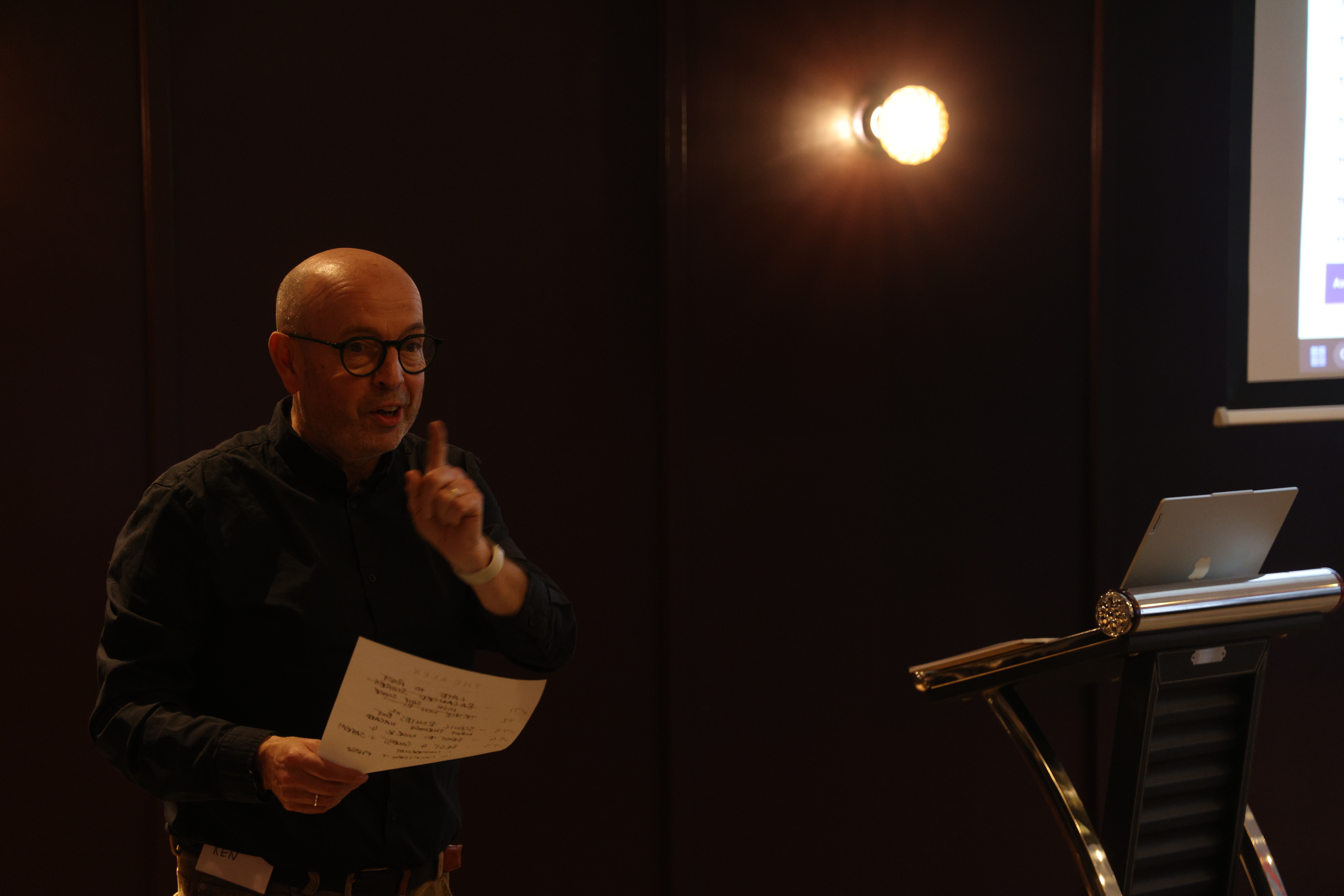
Facilitator presenting to audience during a business simulation, holding notes and gesturing while speaking

Leadership skills healthcheck

A 12 point healthcheck across the three perspectives a leader has to manage: their team, their partners, and themselves.

12skills to score

Your team

How you work with the people you lead.

  1. Team setup

    Getting a team organised for success before the work starts: who does what, what could go wrong, and how confident you really are of the goal.

    How strong is this skill today
  2. Team decision-making

    Decisions get made, by the right people, with the right involvement, and then stick.

    How strong is this skill today
  3. Team meetings

    Meetings that are worth the hours they cost, and that end with clear commitments rather than vague intentions.

    How strong is this skill today
  4. Team communications

    A safe, positive and authentic communications environment, where people will say the difficult thing.

    How strong is this skill today

Your partners

How you work with everyone outside your own team.

  1. Conflict management

    Surfacing disagreement early and working it through, rather than letting it settle into resentment or avoidance.

    How strong is this skill today
  2. Senior communications

    Keeping sponsors and senior stakeholders genuinely informed and committed, including when the news is bad.

    How strong is this skill today
  3. Negotiation

    Give and take with another party for mutual advantage. If there are no trade-offs, it is probably one-sided.

    How strong is this skill today
  4. Collaboration

    Working effectively across boundaries, prioritising the whole over your own part or team.

    How strong is this skill today

Yourself

How you manage the one resource you cannot replace.

  1. Evidence-based decisions

    Deciding on what the evidence actually supports, rather than on the most confident voice in the room.

    How strong is this skill today
  2. Unconscious bias

    Recognising the biases shaping your own judgement, and building in the checks that catch them.

    How strong is this skill today
  3. Commitment management

    Seeking, making and recording clear commitments, and spotting the weasel ones. A commitment nobody wrote down is not worth the paper it is not written on.

    How strong is this skill today
  4. Early warning systems

    Knowing that something has gone wrong while there is still time to act on it, rather than at the deadline.

    How strong is this skill today

Your report

Only used as the heading on your report and in the download's filename. Like your answers it stays in this browser: we never receive it, and it is not used for marketing.

Score at least one skill and your report appears here.

The 12 skills, in three groups

Twelve skills, grouped by the three directions a leader has to manage in: how you work with the team you lead, how you work with everybody outside it, and how you manage yourself.

Your team

  • Team setup: getting a team organised for success before the work starts, including who does what, what could go wrong, and how confident you really are of the goal
  • Team decision-making: decisions get made, by the right people, with the right involvement, and then stick
  • Team meetings: meetings worth the hours they cost, ending with clear commitments rather than vague intentions
  • Team communications: a safe, positive, and authentic communications environment, where people will say the difficult thing

Your partners

  • Conflict management: surfacing disagreement early and working it through, rather than letting it settle into resentment or avoidance
  • Senior communications: keeping sponsors and senior stakeholders genuinely informed and committed, including when the news is bad
  • Negotiation: give and take with another party for mutual advantage, remembering that if there are no trade-offs it is probably one-sided
  • Collaboration: working effectively across boundaries, prioritising the whole over your own part or team

Yourself

  • Evidence-based decisions: deciding on what the evidence actually supports, rather than on the most confident voice in the room
  • Unconscious bias: recognising the biases shaping your own judgement, and building in the checks that catch them
  • Commitment management: seeking, making, and recording clear commitments, and spotting the weasel ones
  • Early warning systems: knowing that something has gone wrong while there is still time to act on it, rather than at the deadline

Reading your results

Most leaders are noticeably stronger in one of the three groups than the other two, and it is usually the group they were promoted for. A strong team score with a weak partners score is the classic profile of someone who runs their own patch well and is invisible everywhere else.

The self-management group is the one people rate themselves highest on and evidence themselves worst on. If you cannot point to a specific occasion in the last month, the score is probably optimistic.

Using the healthcheck in a session

Run it as a standalone self-assessment, or alongside a team leadership simulation so that people score themselves against decisions they have just made rather than against their general self-image. It also works as a before-and-after measure either side of a development programme. Nothing is sent anywhere.

Talk to us about developing leadership capability across your organisation