Stress test
Set your tolerance for 12 common sources of pressure, then record what you actually felt, and see the gap.The 12 pressure factors
Different people take different things in their stride. What one person finds very stressful is barely noticeable to another, which is why a general question about stress rarely tells you anything useful. These are the 12 factors the tool asks about:
- Time pressure: not enough time for the work in front of you
- Inadequate planning or preparation: going into something under-prepared, whether that is your doing or someone else's
- Insufficient information: having to act without knowing enough to be confident
- Information overload: more coming at you than you can take in and use
- Goal or task vagueness: not being clear what good looks like, or what you are being asked for
- Change overload: the ground moving under you faster than you can adjust
- Fear of failure or coming last: the prospect of losing, or of being seen to lose
- Making mistakes: getting something wrong, and what follows from it
- Collective team responsibility: carrying a result you cannot deliver on your own
- Forming new relationships: working with people you do not know yet
- Unfairness perception: feeling that the situation, or the way it is judged, is not even-handed
- Being in the spotlight: being watched, presenting, or answering for the work
Why you score twice
You set your own tolerance for each factor before a session starts, and then record what you actually experienced partway through. Scoring twice is the point of the exercise.
The gap between the two is what you act on. Where the experience exceeded your tolerance, you have found somewhere to build a coping strategy. Where it fell well short, you have found natural resilience you can lean on, and quite possibly a factor you have been avoiding unnecessarily.
Setting the tolerance first also stops the result being coloured by how the session went. It is much harder to claim afterwards that you are relaxed about time pressure if you said otherwise before anything started.
Using the stress test in a session
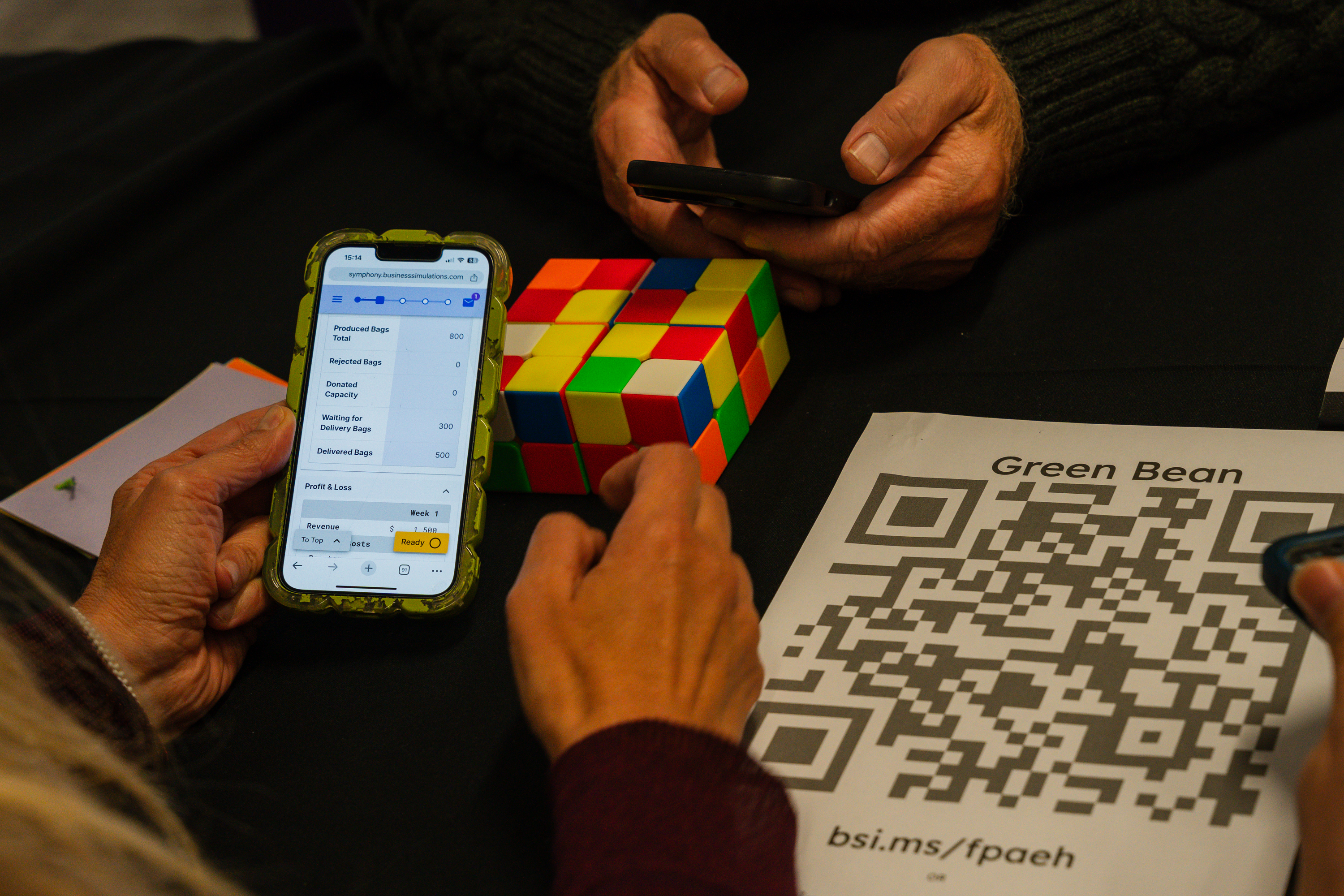
The tool is designed to run alongside a group activity such as a business simulation, where real pressure is present in a psychologically safe setting. Set tolerances beforehand, pause partway through to record what people are actually feeling, and use the gaps as the basis for the debrief.
Nothing is sent anywhere, and the results stay on the individual's own device, which matters for a topic where people will only be honest if they know nobody else is reading it.