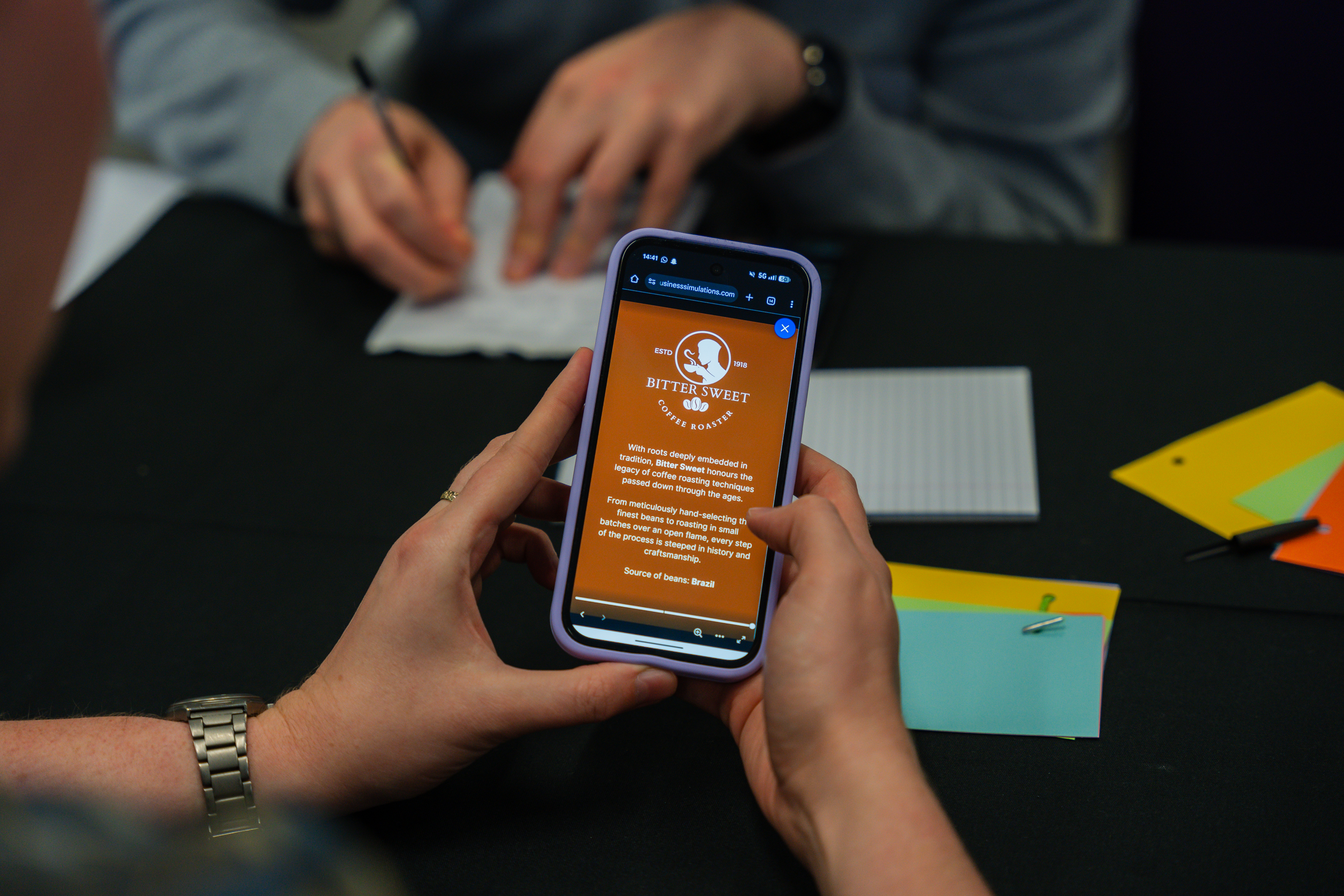
Team members view a mobile app displaying a business simulation interface during a collaborative work session.

Collaboration skills check

Score yourself against the 12 collaboration skills, from the foundations to the advanced seven that most leaders neglect.

12skills to score

The foundations

A ladder of increasingly engaged collaboration. Most leaders recognise these.

  1. Team collaboration

    Collaborating well both when you lead a team and when you are only a member of it. If you cannot collaborate inside your own team, what chance do you have outside it?

    How present and effective is this skill
  2. Coordination

    Communicating well with others who share an interest in a goal or project.

    How present and effective is this skill
  3. Resource sharing

    Sharing common resources, such as people or facilities, equitably and considerately with other parties.

    How present and effective is this skill
  4. Cooperation

    Working together, but separately, on a shared challenge.

    How present and effective is this skill
  5. Co-invention

    Working in a fully integrated way with another party, investing together and sharing both the risk and the reward.

    How present and effective is this skill

The advanced seven

Where collaboration gets genuinely hard, and where the balance with competition matters most.

  1. Avoiding sub-optimisation

    Prioritising the whole over your own part or team. Good systems optimise the whole and sub-optimise the parts; poor ones do the reverse.

    How present and effective is this skill
  2. Collaborative competition

    Collaborating temporarily with a competitor for mutual gain, for example jointly sponsoring an event to grow a market you both want to serve.

    How present and effective is this skill
  3. Alliancing

    Building a partnership, short or long term, beyond your usual boundaries and co-travellers. Think coalition government.

    How present and effective is this skill
  4. Eco-competition

    Winning without needing others to lose. Ask who must lose for you to win, and the honest answer is often nobody.

    How present and effective is this skill
  5. Edgy collaboration

    Collaborating without looking weak. Be a generous team member, but not a naive one: make sure your contribution is seen and credited.

    How present and effective is this skill
  6. Negotiating

    Give and take with another party for mutual advantage. If your collaboration involves no trade-offs, it is probably one-sided rather than mutual.

    How present and effective is this skill
  7. Virtual collaboration

    Doing all of the above not only face to face, but down a phone line or over a video call, which for most teams is now the norm.

    How present and effective is this skill

Your report

Only used as the heading on your report and in the download's filename. Like your answers it stays in this browser: we never receive it, and it is not used for marketing.

Score at least one skill and your report appears here.

The 12 collaboration skills

Most leaders can name three collaboration skills: communicate, share, and be a team player. There are 12. Five are foundations that most people recognise, and seven are advanced skills, where collaboration gets genuinely hard and where the balance with competition matters most.

The five foundations

  1. Team collaboration: collaborating well both when you lead a team and when you are only a member of it
  2. Coordination: communicating well with others who share an interest in a goal or project
  3. Resource sharing: sharing common resources, such as people or facilities, equitably and considerately
  4. Cooperation: working together, but separately, on a shared challenge
  5. Co-invention: working in a fully integrated way with another party, investing together and sharing both the risk and the reward

The advanced seven

  1. Avoiding sub-optimisation: prioritising the whole over your own part or team
  2. Collaborative competition: collaborating temporarily with a competitor for mutual gain
  3. Alliancing: building a partnership beyond your usual boundaries and co-travellers
  4. Eco-competition: winning without needing anybody else to lose
  5. Edgy collaboration: collaborating generously without looking naïve, and making sure your contribution is seen
  6. Negotiating: give and take for mutual advantage, because collaboration with no trade-offs is usually one-sided
  7. Virtual collaboration: doing all of the above down a phone line or over a video call, which for most teams is now the norm

Using the check in a session

Score yourself against all 12 first, then ask a colleague to score you too. The disagreements are where the useful conversations start, and a shared record gives you a baseline to develop against over time.

Run it with a whole team and the pattern across the group usually says more than any individual result. Teams tend to score well on the foundations and poorly on the advanced seven, which is exactly where the value sits.

For the reasoning behind each skill, read our collaboration skills checklist for leaders. To build the capability rather than only measure it, see our collaboration challenge.

Talk to us about strengthening collaboration across your teams