Cohesion: a team cohesion simulation
Win over a team you've inherited, then build how it works.
Leading a high-performing teams project
Cohesion puts participants in charge of a high-performing teams project. They've just taken over a team, and the job is to win its members over to a new way of working while building the processes the team runs on.
There are no budgets to balance. Every decision is about people, from who to talk to next to which part of the team's working life needs attention. Trust and good processes grow together, which is why organisations use Cohesion when they're building high-performing teams.
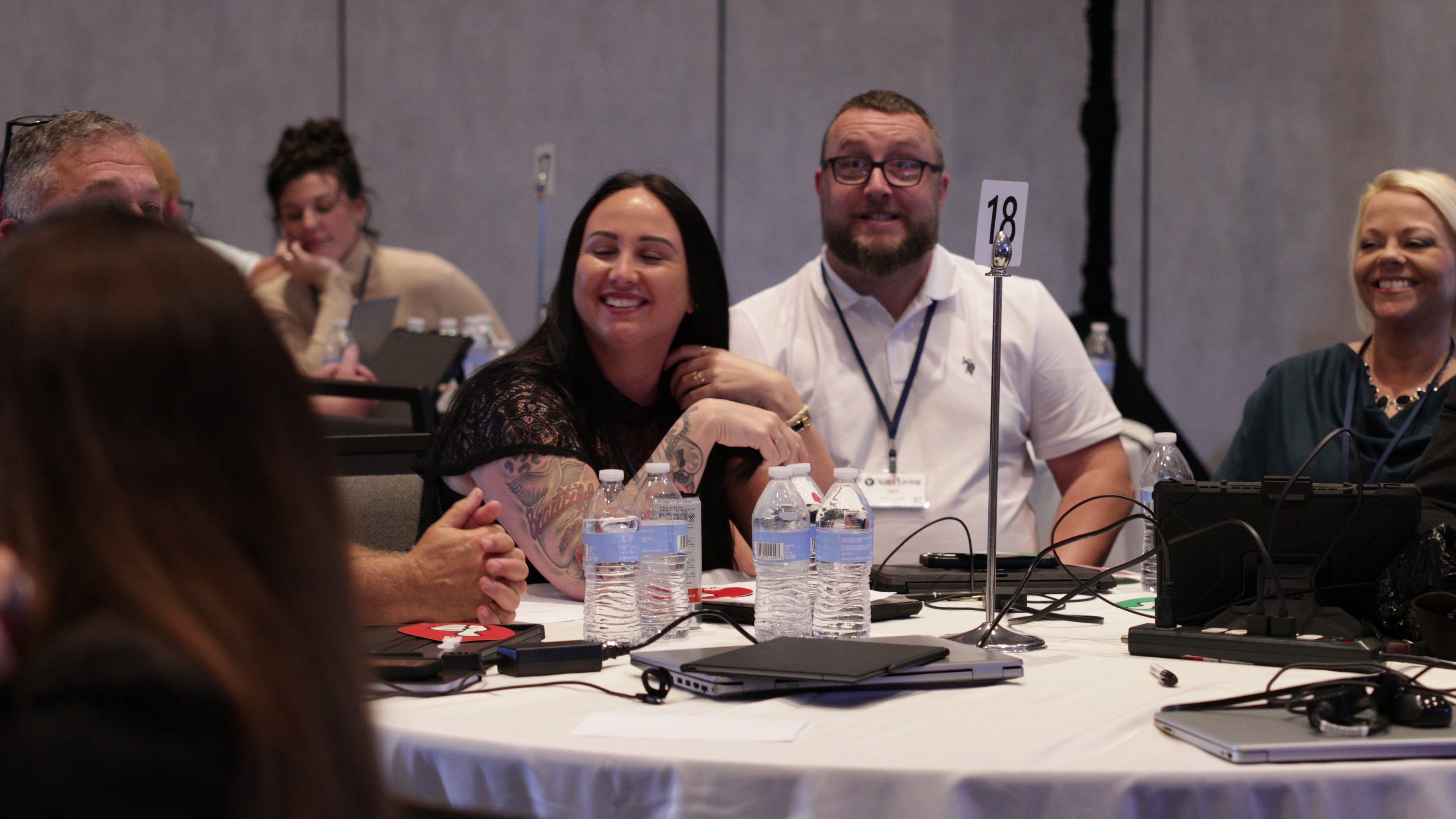
What a session looks like
Most of the time is spent around the table, as teams talk through who to approach and what the team needs next.
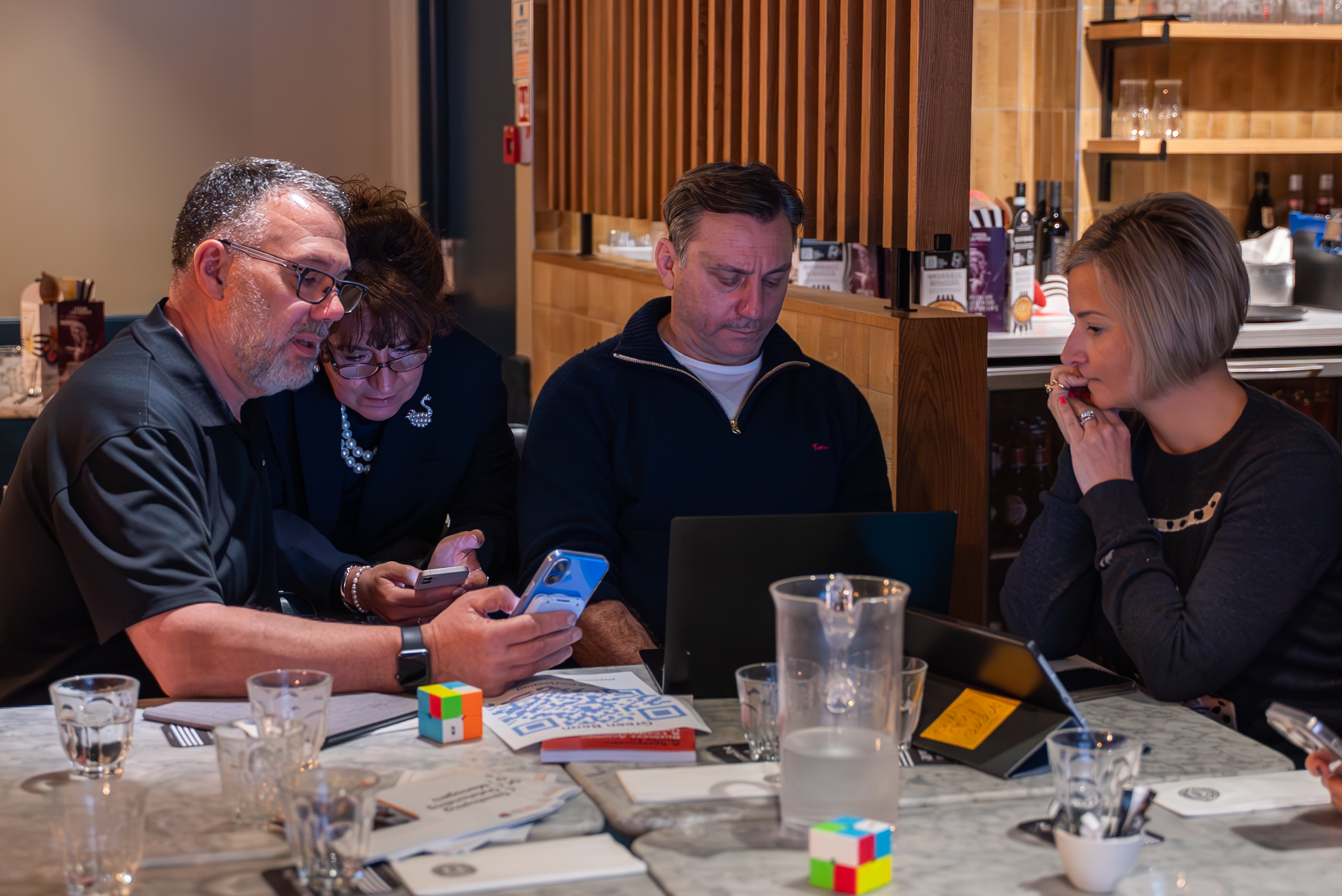
A few conversations a week, and a whole team to reach
Each week, a team only gets a handful of conversations. It can't reach everyone, so it has to decide who matters most right now and who can wait.
Every conversation has a topic. The topics run from meeting someone informally, through seeking their views, to asking them to take on a leadership role. A big ask lands well with someone who already trusts you. With a near stranger, it usually doesn't.
Not everyone carries the same weight, either. Some people matter because of their position. Others matter because colleagues ask their opinion, and they're easy to miss on an organisation chart. A social network view and a stakeholder map help teams work out who's who.
How trust gets built
The conversation topics form a ladder, from a first informal chat to asking someone to lead. Each step asks a little more of the person than the last, and it only works if the step before it has landed.
Teams that climb in order tend to keep the people they win over. Teams that rush to the big asks usually find people agree in the meeting and then quietly drift back. And nobody stays won over on their own: the people who said yes still need someone coming back to them.
Get to know them
Informal meetings and asking for people's views. Nothing is asked of anyone yet, and that's deliberate.
Find their part
Exploring the role someone might play, then agreeing what they're accountable for.
Hand over the lead
Asking people to lead parts of the team and coaching them, then coming back so their commitment doesn't fade.
The work underneath the change
Winning people over is only half of it. The other half is how the team actually runs, from its meetings to the way it shares information and supports people.
There are more processes than any team can fix, and only a couple of interventions a week, so teams have to choose. Some processes are foundations, and the more advanced ones only hold once those are in place.
Neither half works on its own. People who've come on board make new processes stick, and a team that works well is easier to win over.
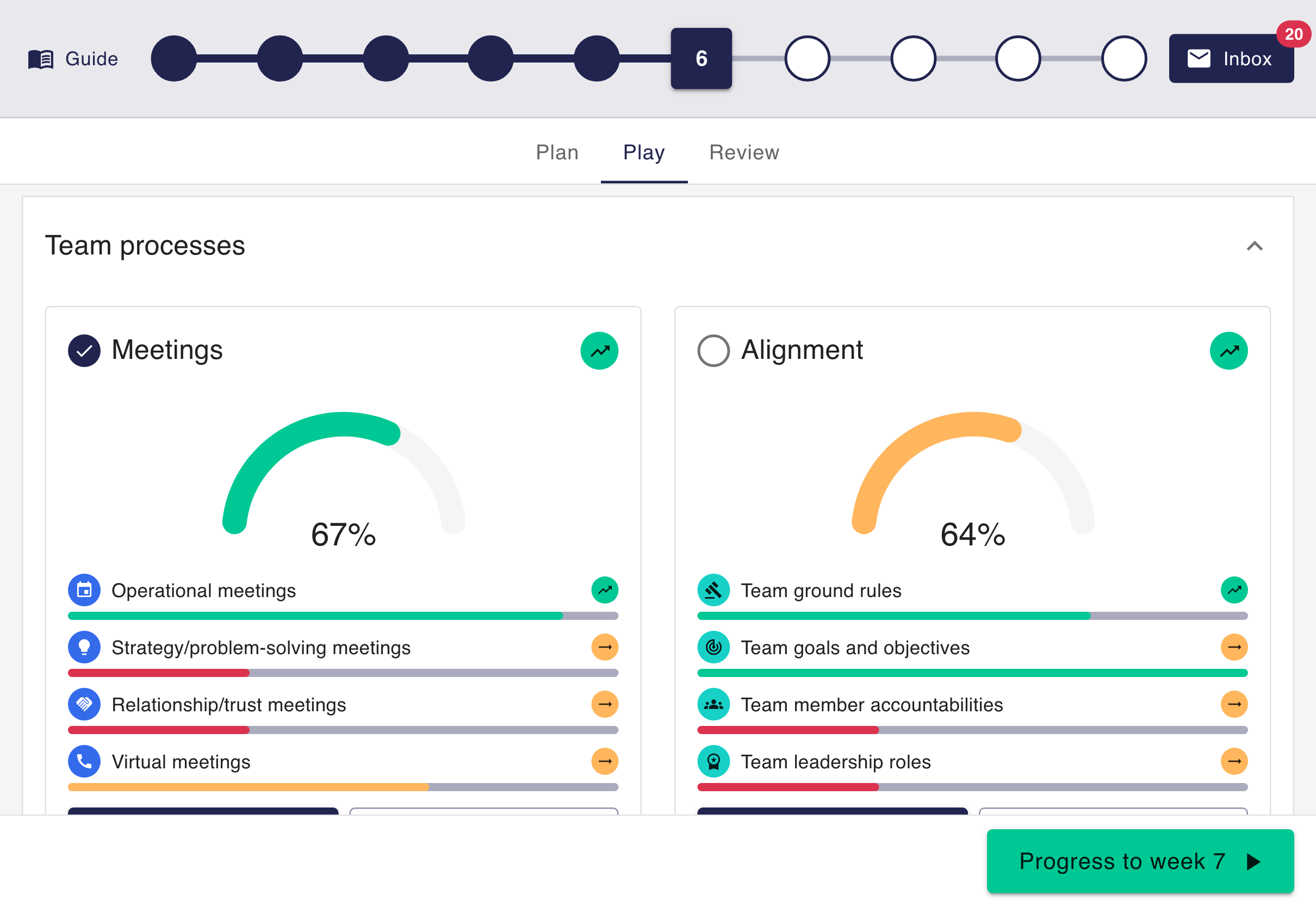
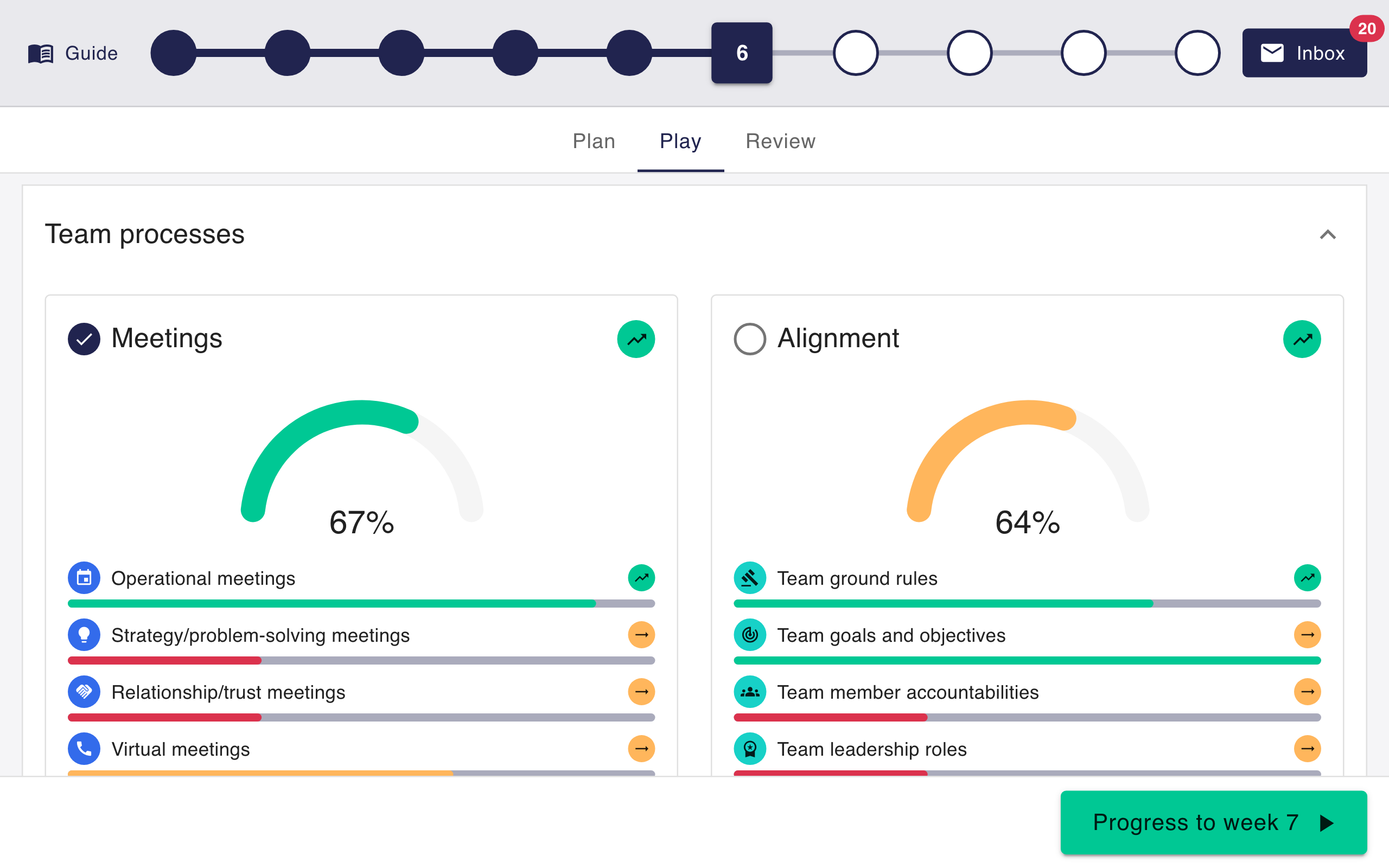
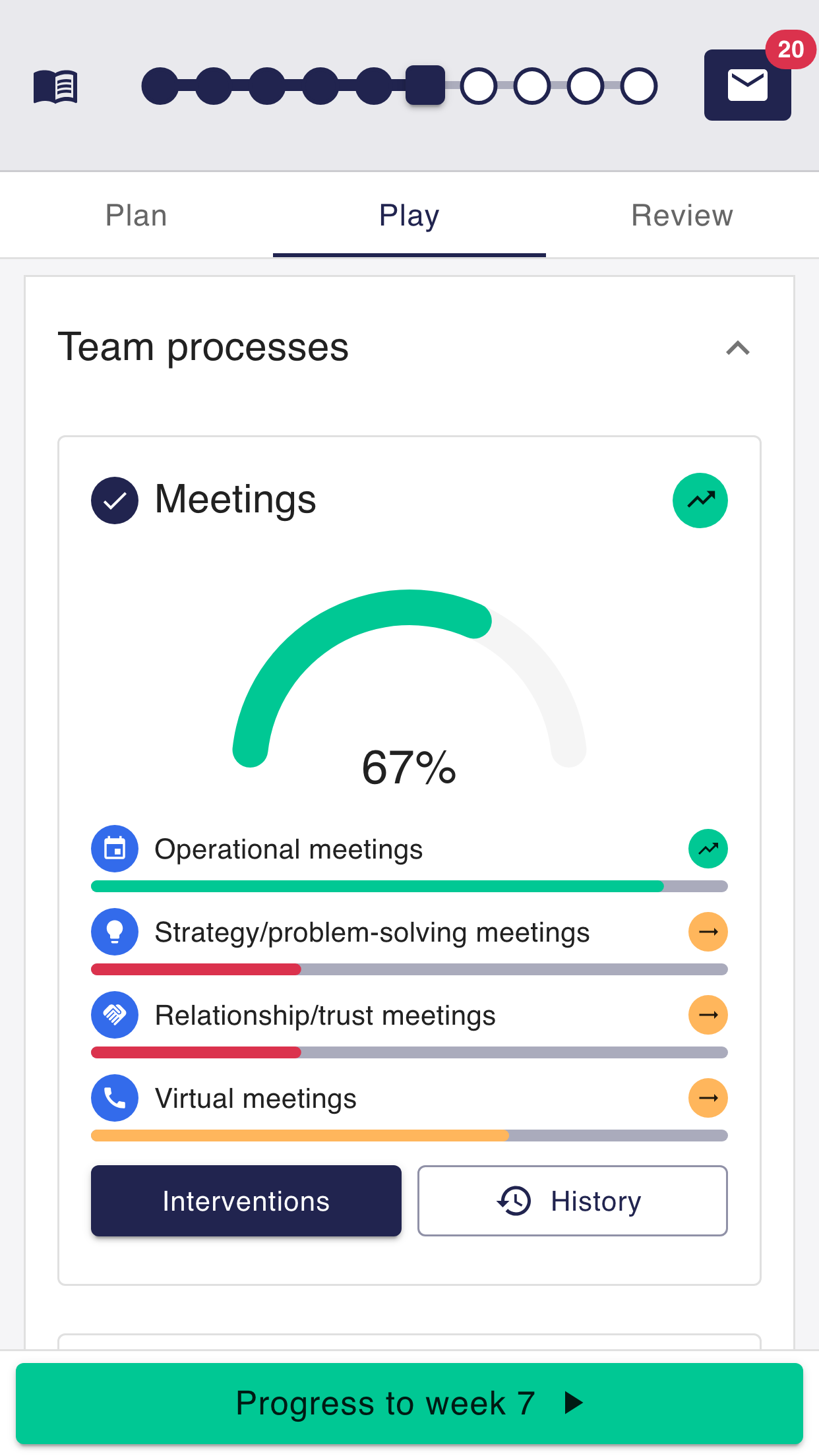
Build the foundations
Week one of a team pilot, and the chief executive is watching.
Your team
 FunmilayoOur operational meetings overrun every week. Fix those and everyone feels it.
 MathieuCan we agree how we work together before we add anything new?
 LadanThe chief executive wants to see progress. Start on leadership roles so there’s something to show.
 DonalTwo of us have been at odds for weeks. Sort that out first.
Four weeks on
Choose two processes, in different strands
Based on a decision in Cohesion.
What teams take away
By the end, teams have practised reading a team they've taken over. They know who's with them, who isn't yet, and what it would take to change that.
They've built trust in a sensible order and laid down team processes from the foundations up. They've also set a team up to lead itself, starting with goals, roles and souls and ending with handing leadership over.
The simulation gives measures rather than verdicts. It never says which conversation was the mistake. Working that out is what the debrief is for.
Running Cohesion with your own facilitators
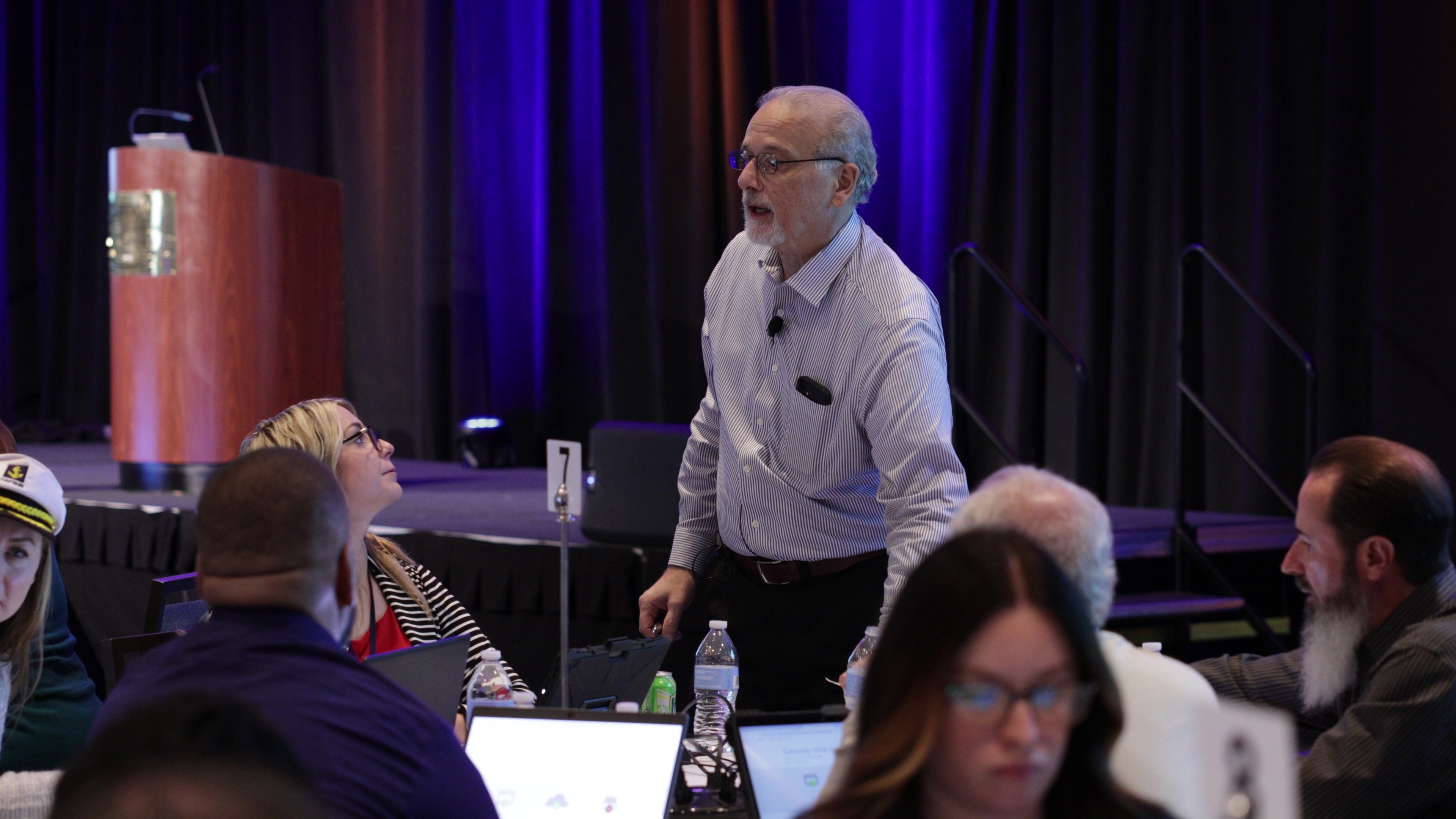
We can run Cohesion for you, or train your facilitators to deliver it through a train the trainer session.
The facilitator materials come with it:
- A presentation that carries the session from the opening story to the final debrief
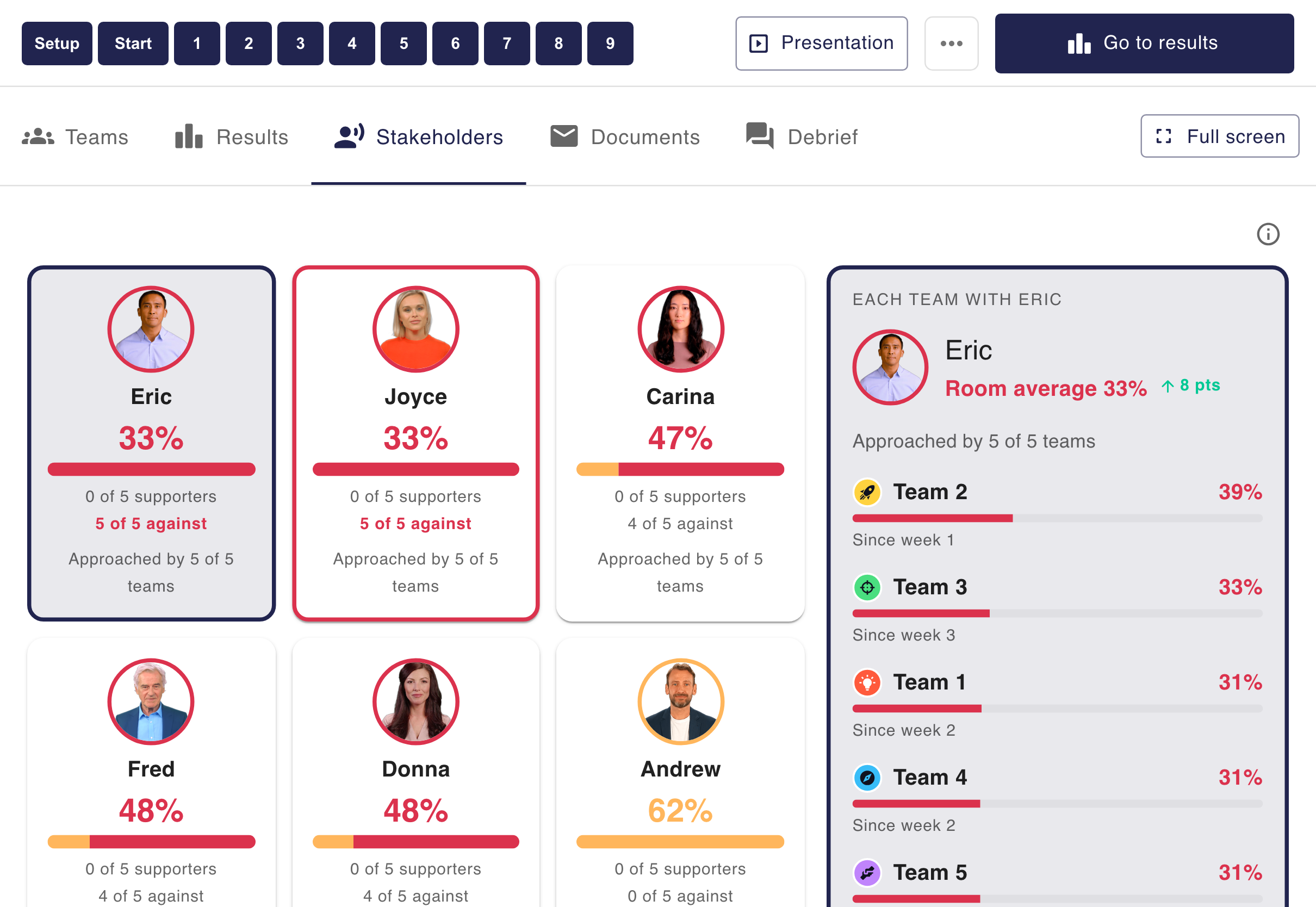
- A facilitator screen showing how every team stands with each member of the team
- A debrief view between rounds, with each team's facts and questions for the room
- A walkthrough video and a practice run for participants
- An AI co-facilitator that can describe any team's position in plain English
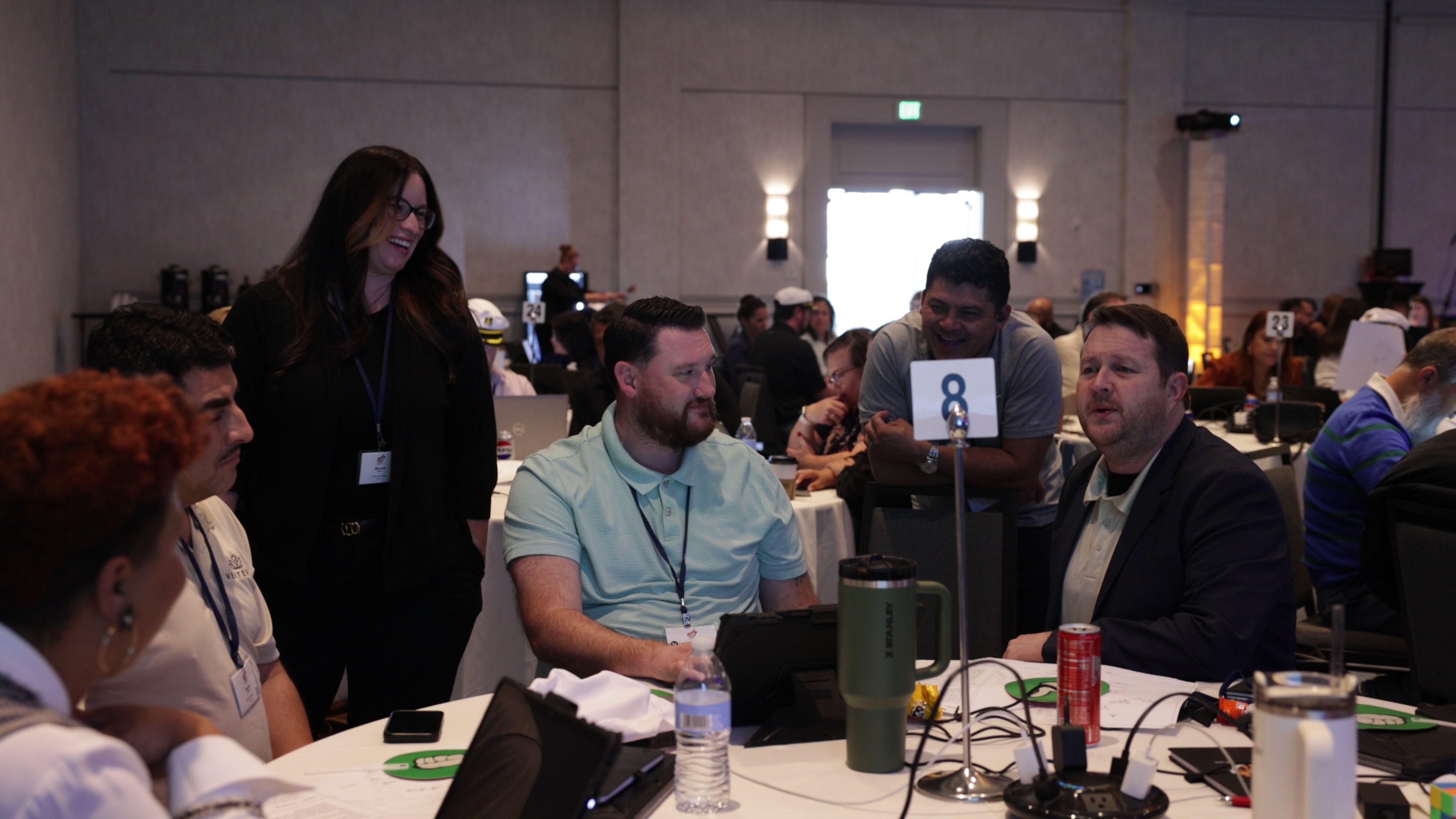
Cohesion works in a room or online, with breakout rooms standing in for tables.
Where organisations use Cohesion
The same simulation suits very different groups. Here are some of the ways organisations use it.
Leadership teams
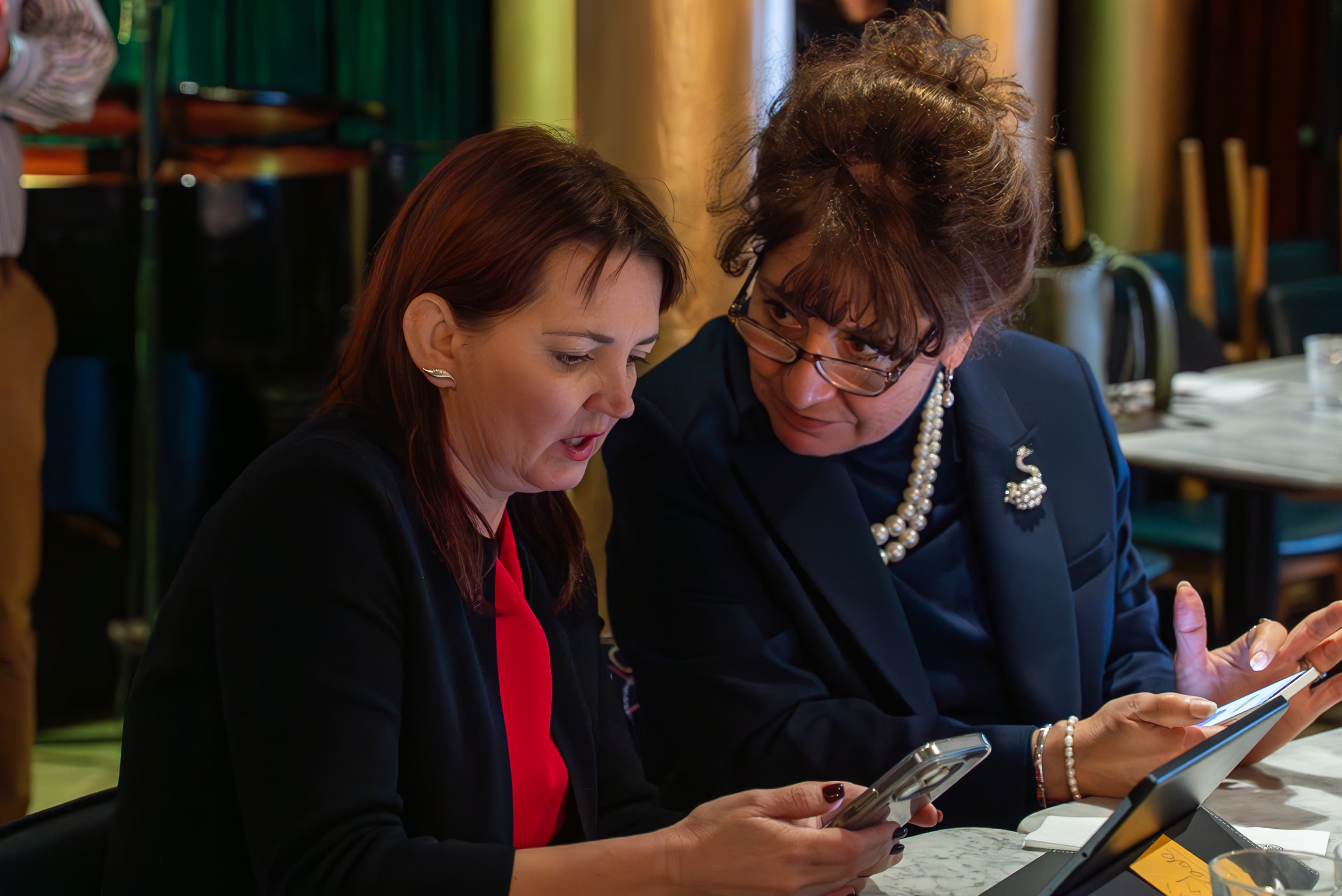
Looking honestly at how they win support inside their own team, and what they tend to leave until later.
New and emerging managers
Practising the first months of leading a team before doing it for real.
Business schools
Giving students a team to win over, so ideas about trust and team development have something to work on.
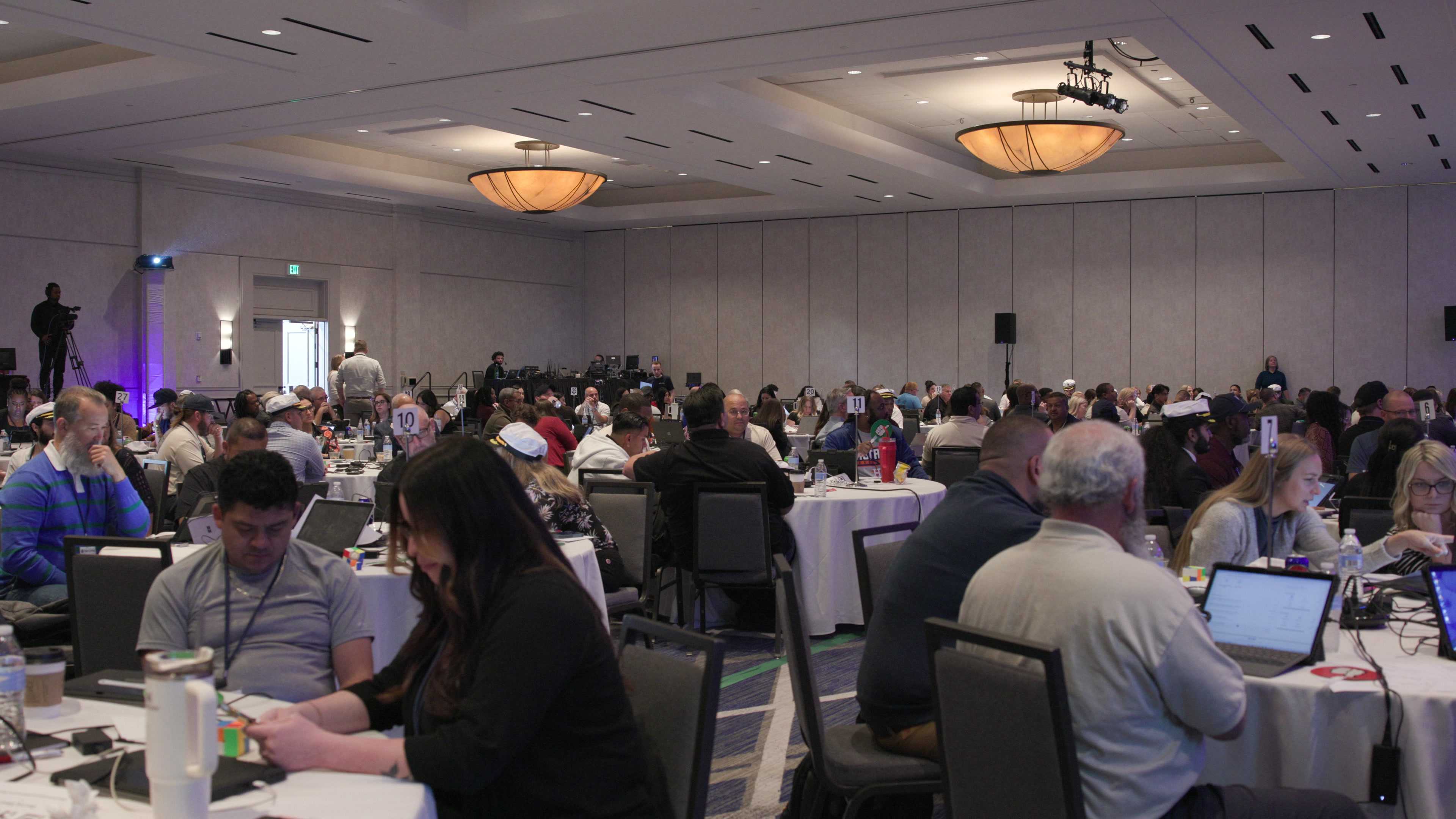
Conferences and events
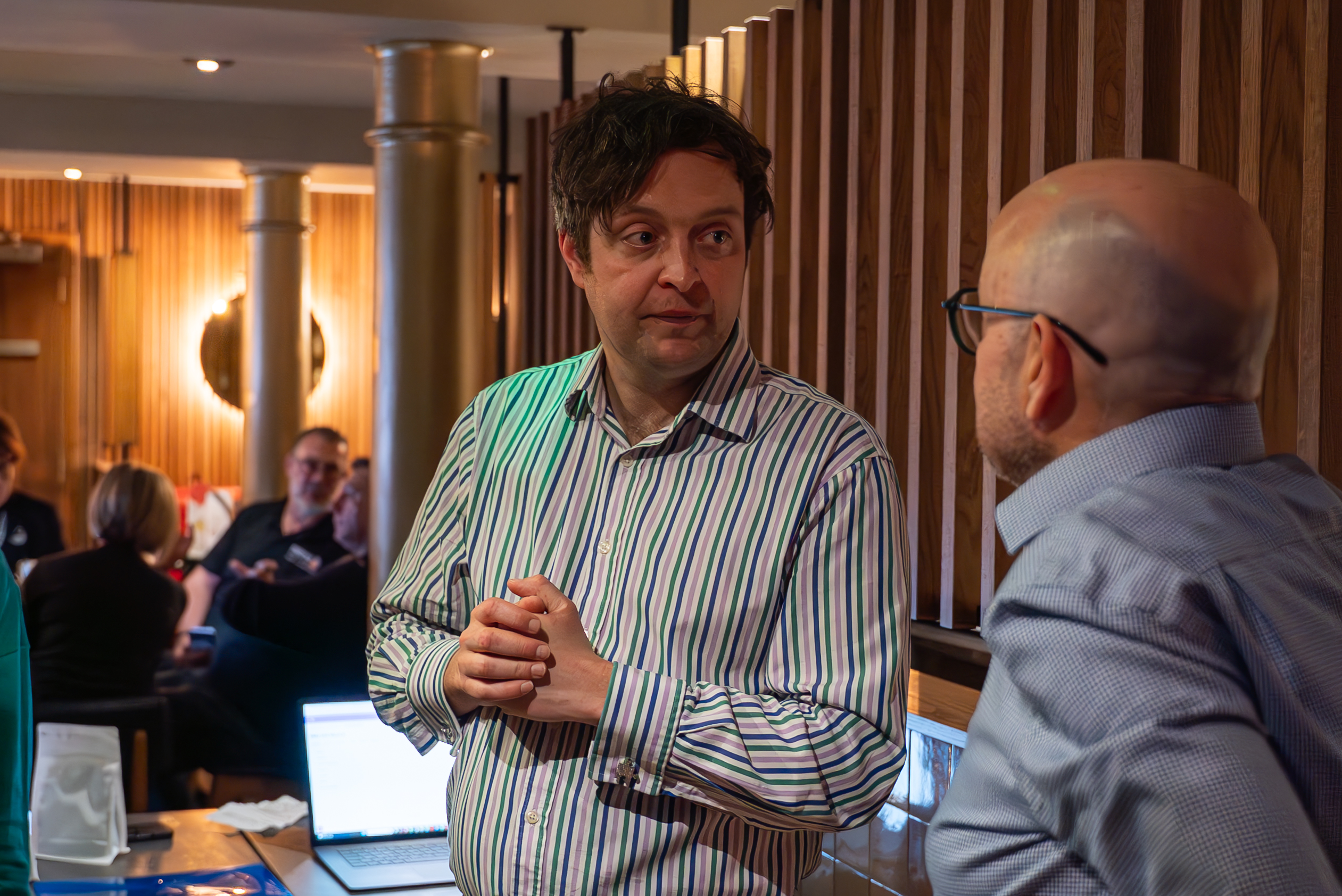
A people-focused session where every table takes on the same team, then the room compares approaches.
Cohesion and our other people simulations
Cohesion sits alongside our other simulations about people, teams, and change. They differ in whose support teams are working for, what they decide, and the idea the debrief draws out.
| Cohesion | Influence | Crew | Consortium | |
|---|---|---|---|---|
| Whose support teams work for | A team they've just taken over | Stakeholders across an organisation | The team they lead day to day | Partners who are also competitors |
| What teams practise | Building trust and team processes | Winning support for change | Delegation and developing people | Cooperating with rivals |
| Each week, teams decide | Who to talk to, and what to fix | Who to approach, and what to say | Who works on what, and when | How much capacity to pledge |
| The idea at its heart | Trust and process grow together | Influence is social, not just positional | Balancing task, team, and individual | Collaboration means taking a risk |
| Financial decisions | No | No | No | Yes |
| Can be tailored to your organisation | Yes | Yes | Yes | Yes |
Questions about Cohesion
What is Cohesion?
Cohesion is a team cohesion simulation in which participants lead a high-performing teams project. They take over a team and win its members over to a new way of working, choosing who to talk to and which team processes to improve. It shows how trust and good processes build on each other.
Who uses Cohesion?
Organisations use it with leadership teams, new and emerging managers, business school students, and conference audiences. The facilitation adapts to the group, so it works for people leading a team for the first time and for experienced leaders.
How long does Cohesion take?
It fits the time you have. Cohesion can run as a conference session, a workshop, or across several sessions within a longer programme.
How many people can take part?
Participants work in small teams, and there's no set limit on the number of teams. It suits a single leadership team as well as a full conference room.
Do teams compete against each other?
No. Each team works with its own copy of the same team, so nothing one team does affects another. The facilitator brings the room together between rounds to compare approaches.
Can we run Cohesion ourselves?
Yes. We can train your facilitators through a train the trainer session, and the facilitator materials include a presentation, a debrief view, and a walkthrough for participants. We can also run it for you.
Can Cohesion be tailored to our organisation?
Yes. The scenario can be adjusted to reflect your organisation, and we can build a tailor-made simulation around your own setting.
Is Cohesion a team building activity?
Not in the away-day sense. It's a learning intervention about how trust and team processes develop, so it fits leadership and team development programmes. It's enjoyable and it gets a group talking, but the focus stays on what leaders do.
How is Cohesion different from Influence and Crew?
What do participants need?
Everyone joins on their own phone, tablet, or laptop, in a room or online. In a room, teams need enough space to talk without being overheard by other teams.
Talk to us about Cohesion
Tell us about the group and what you'd like them to take away, and we'll show you where Cohesion fits.
Thank you. We'll be in touch soon.