Experiential learning vs traditional learning: why the old model is failing
By Scott ThompsonLast updated Jul 24, 2026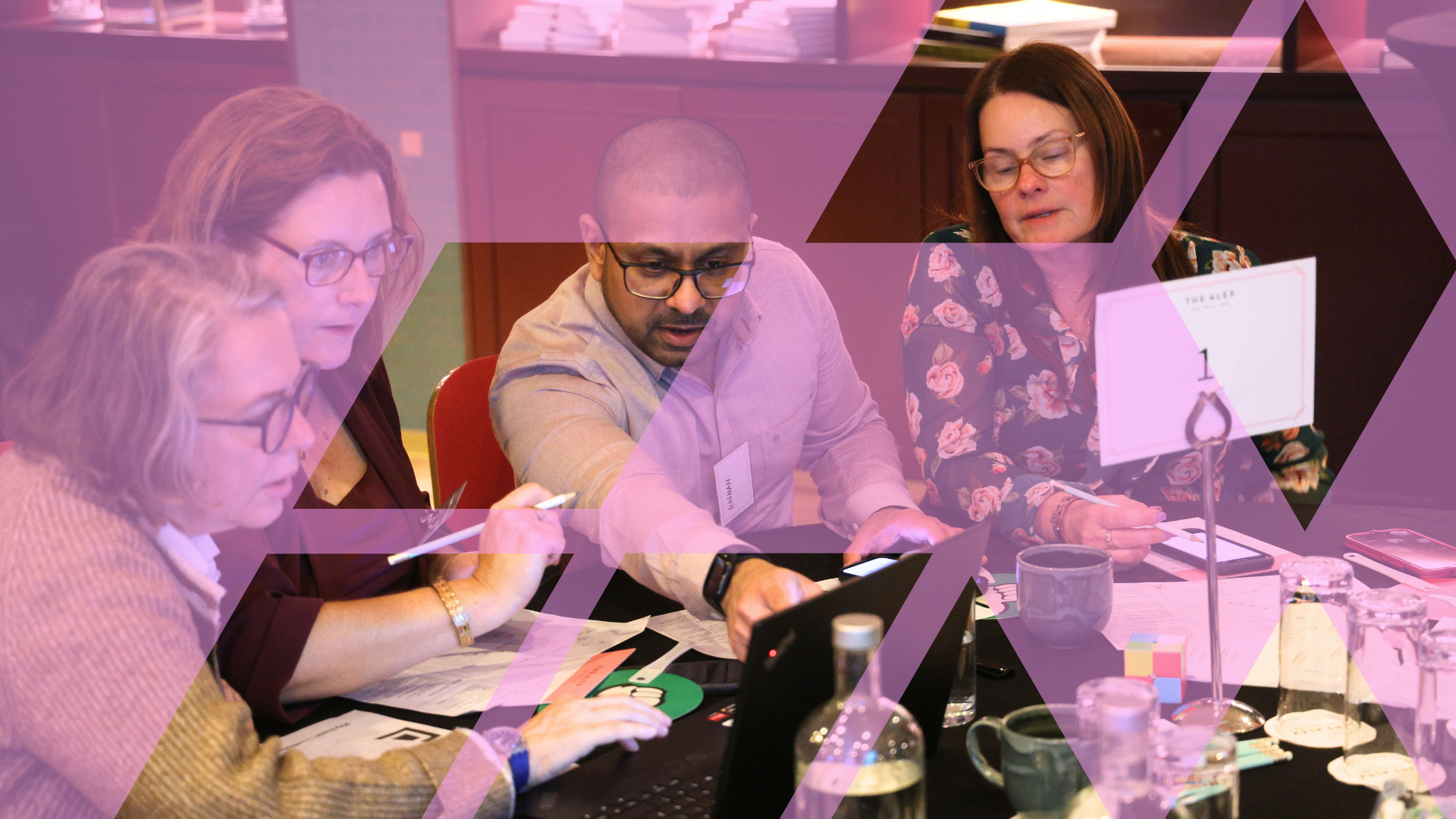
Experiential learning is increasingly recognised as a more effective alternative to traditional learning in education and workplace training. However, despite strong evidence supporting experiential learning and active learning methods, most organisations continue to rely on old school, lecture-based training models.
What is ‘traditional learning’?
A format, also often referred to as classroom learning, that is focused on knowledge transfer from an expert to a learner. Typically the mode of delivery is lecture-based, structured around presentation and explanation. Engagement is generally low and, at best, limited to questions and answers depending on the approach of the facilitator.
The underlying assumption is that exposure to information leads to understanding, and that understanding will translate into application. In practice, this translation step is often weak or inconsistent. Learners may leave with conceptual clarity but lack the ability or confidence to apply that knowledge in a real context.
This gap is further reinforced by how traditional learning is often assessed. Success is typically measured through recall rather than application, which incentivises short-term retention rather than long-term behavioural change.
Examples of traditional learning include lecture hall presentations, traditional case-studies and the majority of e-learning on offer, particularly those focused on passive consumption rather than interaction.

What is ‘experiential learning’?
Experiential learning is a method of learning through direct experience, where participants apply knowledge by making decisions, solving problems, and reflecting on outcomes in real or simulated environments.
The objective is not just understanding, but behavioural change. By actively engaging with the content, learners are more likely to retain knowledge and apply it in real contexts, making the learning ‘sticky’.
Experiential learning also introduces iteration. Participants are not expected to get decisions right first time. Instead, they test approaches, receive feedback, and refine their thinking. This cycle of action and reflection is a key mechanism through which deeper learning occurs.
A core requirement for this approach is psychological safety. Participants must feel able to test ideas, make mistakes, and adapt without fear of negative consequences. Without this, experimentation is limited and the effectiveness of the experience is reduced. You can find more detail on this in my article ‘Psychological safety in experiential learning’.
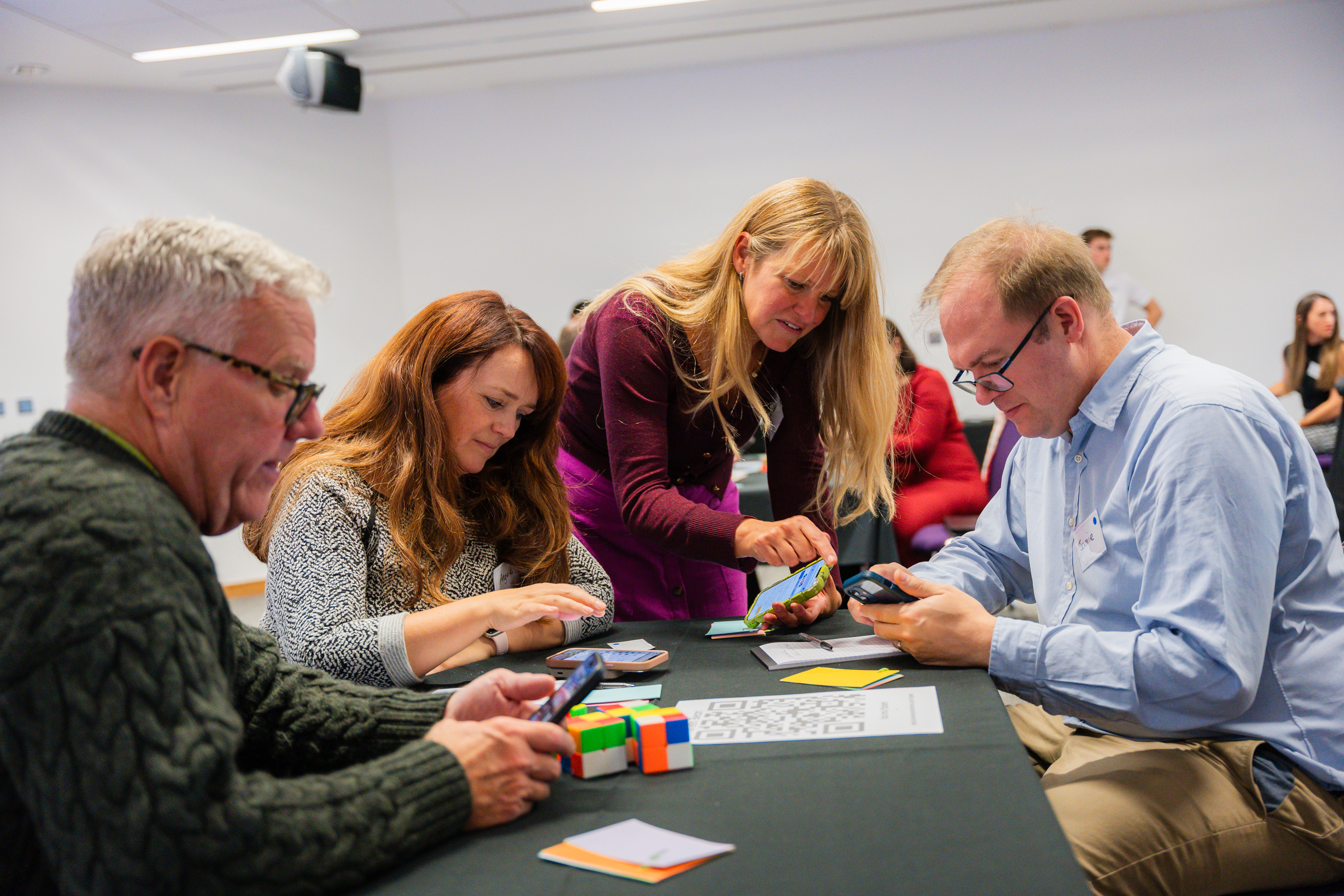
Examples of this form of active learning include business simulations, design sprints, table top exercises and other forms of serious gaming, all of which create structured environments for decision-making and reflection.
What evidence is there that experiential learning is more effective?
Research from Harvard provides a clear signal. Studies on active learning, which encompasses experiential approaches, show that participants consistently achieve higher learning outcomes when they are required to engage, apply, and reflect, compared to passive lecture-based formats.
One widely cited finding is that learners often believe they learn more from lectures, while objective measures show the opposite. This disconnect highlights a critical issue: perceived learning is not the same as actual learning.
Further studies reinforce this pattern, showing improved retention, higher engagement levels, and better transfer of learning into workplace behaviour when experiential methods are used.
The implication is direct. Learning effectiveness increases when individuals are required to apply knowledge, make decisions under constraints, receive feedback, and iterate. Passive exposure does not reliably produce these outcomes.
Why is most learning still delivered in the traditional format?
The primary driver is operational simplicity.
Traditional learning is perceived as easier to design, easier to standardise, and easier to deliver at scale. It aligns with existing structures: fixed agendas, predictable timings and uniform content. It requires lower facilitator interactivity and introduces minimal variability in delivery.
By contrast, experiential learning introduces variability. It requires more deliberate design, stronger facilitation, and a tolerance for ambiguity during delivery. This creates a perception of increased risk, even if the learning outcomes are demonstrably stronger.
There is also an inertia effect. Organisations tend to replicate familiar approaches, particularly when those approaches are embedded in systems, budgets, and stakeholder expectations. Changing the format of learning often requires not just design change, but mindset change.
As a result, many organisations optimise for efficiency and predictability over effectiveness.
How can I introduce effective experiential learning into my delivery?
Full programme redesign is not required.
Experiential elements can be introduced incrementally through structured interventions. Business simulations and serious gaming provide a controlled mechanism to achieve this. They are pre-designed environments in which participants must make decisions, manage trade-offs, and respond to outcomes. Our strategic thinking simulations are built around exactly that pressure, and Dilemma is a good example: teams run a business through a series of competing demands and see where each decision leads.
This structure addresses the primary barriers. Design effort is reduced because the experience is already built. Delivery risk is reduced because scenarios are bounded and repeatable. Facilitation is guided by a defined framework.
These approaches also integrate naturally into existing programmes. A simulation can sit alongside more traditional elements, acting as the point where concepts are applied and tested rather than simply discussed.
Critically, these methods embed application directly into the learning process. Participants are not told what to do; they are required to do it, observe the results, and adjust. This creates a direct link between knowledge and behaviour.
In practice, this enables rapid adoption. Experiential learning can be embedded within existing programmes, scaled across cohorts, and delivered consistently without requiring fundamental changes to the overall learning architecture.
Best of both worlds
A hybrid approach that combines traditional and experiential learning delivers the strongest outcomes. Traditional methods provide structure, frameworks, and foundational knowledge, while experiential learning ensures that knowledge is applied, tested, and embedded through decision-making and reflection. Used together, they close the gap between understanding and execution, enabling learners not only to know what to do, but to demonstrate it in practice.
If you would like to explore how a business simulation could complement your leadership and workplace training programme, start with our strategic thinking challenge page to see how the approach works in practice, or get in touch to talk through your programme.
About the Author

With a background in technology, Scott is responsible for overseeing the architecture, design and development of our platforms as well as managing the business.
Published Mar 19, 2026