Frequently Asked Questions
Getting Started
What is the duration of a simulation?
Simulations typically run between two and 10 hours, depending on the programme and learning objectives. Half-day sessions (four to six hours) are most common for management fundamentals, while full-day or multi-day programmes (six+ hours) suit executive development and complex strategic scenarios.
Is virtual delivery an option?
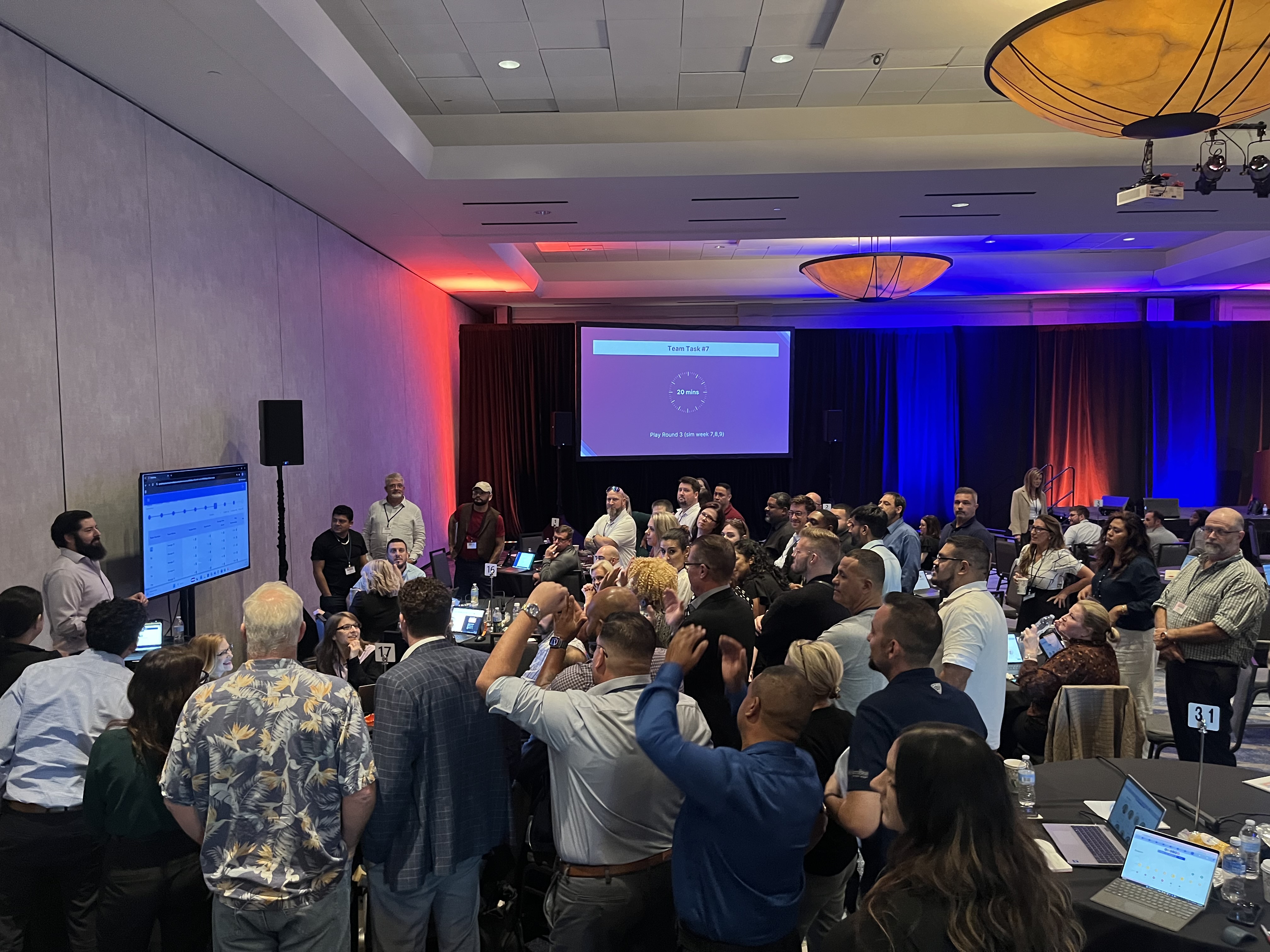
Yes, simulations can be delivered either virtually or in-person based on your requirements. Virtual delivery works exceptionally well for remote and global teams, with participants often reporting higher engagement than traditional online training, and we offer flexible formats including intensive single sessions or shorter sessions spread across multiple days.
Can I facilitate the simulations myself?
Yes, we offer a comprehensive train-the-trainer programme to certify individuals to deliver our simulations independently. This enables your organisation to deploy simulations at scale with lower marginal costs, ideal for organisations developing hundreds of leaders annually.
Are simulations suitable for individual participants?
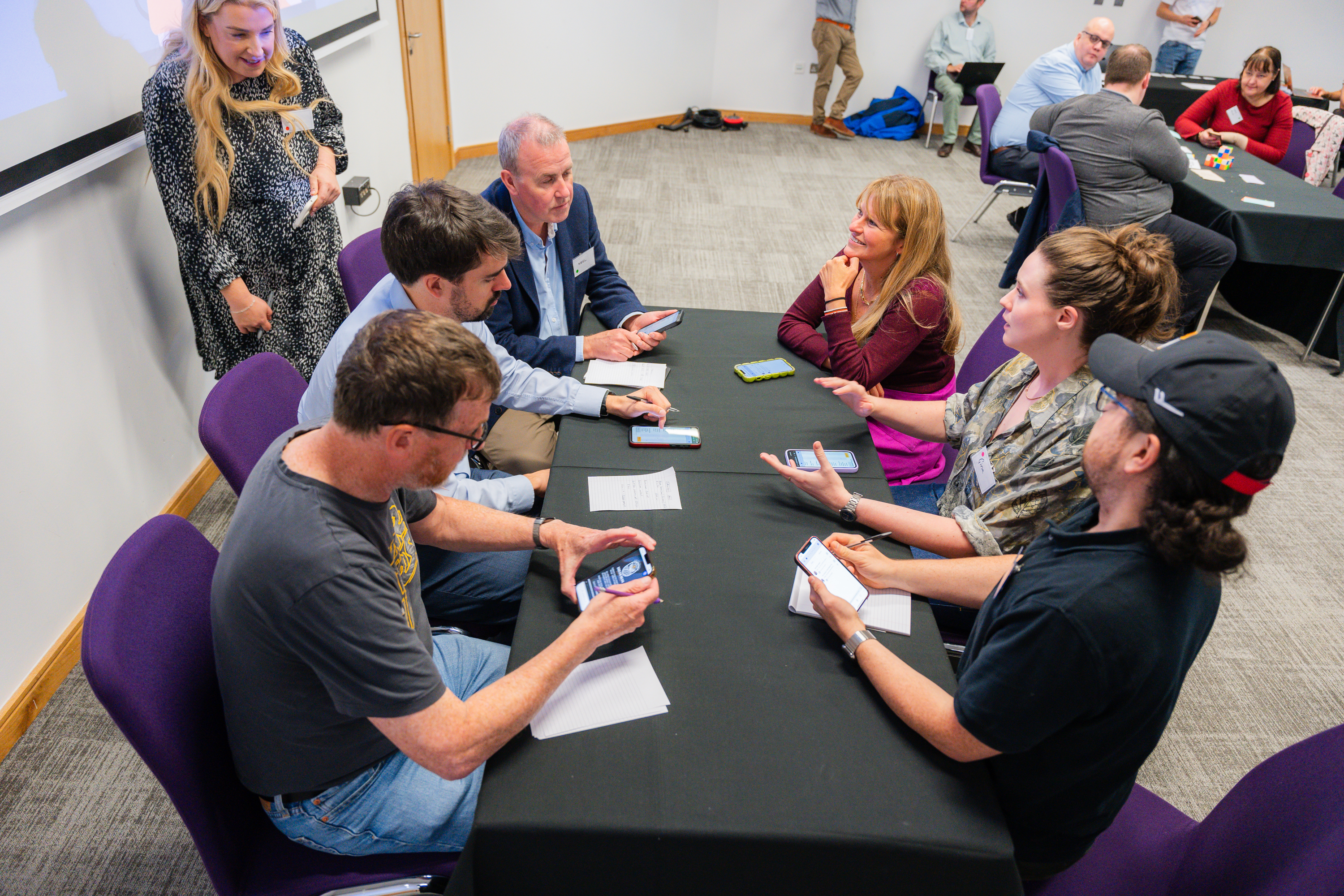
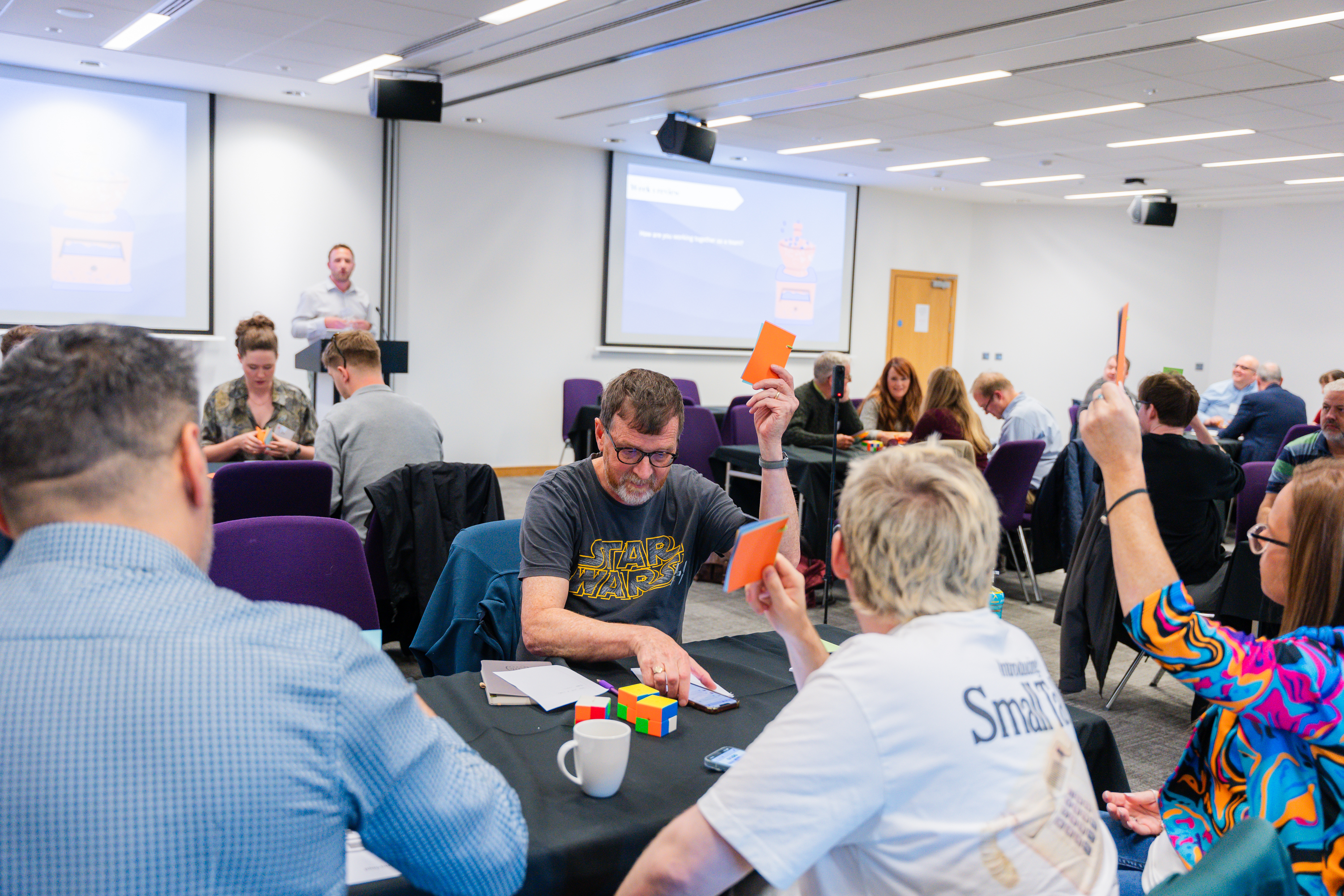
No, our simulations are designed for collaborative, team-based engagement and are not intended for solo participation. The learning comes from team discussion, diverse perspectives, and collaborative decision-making under pressure - typically requiring teams of four to six participants working together.
Understanding business simulations
What's the difference between a business simulation and a serious game?
Business simulations are structured learning experiences designed to develop specific leadership competencies through realistic business scenarios with facilitated debriefs and measurable outcomes, while serious games are gamified experiences that may lack the depth, realism, and expert facilitation that drive organisational learning. Organisations choose simulations when they need measurable behavioural change in strategic thinking and leadership judgement rather than just engagement.
Business simulations vs traditional training - which is better?
Business simulations excel at developing decision-making, strategic thinking, and leadership judgement with 75% better retention than traditional training, while traditional training is better for knowledge transfer and compliance. The most effective approach combines both: use traditional training to build foundational knowledge, then deploy simulations to practise applying that knowledge in realistic scenarios with psychological safety.
How do you prevent participants from 'gaming' the simulation?
Well-designed simulations prevent gaming through complexity that makes simple optimisation impossible, facilitated debriefs that emphasise learning over winning, and assessment focused on decision-making process rather than just outcomes. The goal isn't to find the 'right answer' but to practise strategic thinking - participants who try to game the system typically perform poorly in debriefs where they must explain their strategic rationale.
Customisation and industries
Can business simulations be customised for our specific industry?
Yes, simulations can be customised at three levels: light customisation adapts scenario context to your industry, moderate customisation designs scenarios based on your strategic challenges, while fully custom simulations build entirely new experiences reflecting your unique business model. We've created custom simulations for pharmaceuticals, financial services, manufacturing, retail, technology, and government sectors.
What industries benefit most from business simulations?
All industries benefit when developing leadership capabilities, but organisations in complex, regulated, or rapidly changing sectors see particularly high value: pharmaceuticals, financial services, manufacturing, technology, retail, and government. Industries with high-stakes decisions or situations where real-world mistakes are costly benefit most because simulations compress years of experience into hours safely.
Executive education and assessment
Are business simulations suitable for executive education programmes?
Yes, simulations are particularly valuable for executive education because senior leaders need strategic judgement and experiential practice rather than just theoretical knowledge. Leading business schools like Hult, Vlerick, and HKUST integrate simulations across leadership programmes, with executives consistently rating them as the 'most valuable component', though success requires expert facilitation capable of engaging with senior leaders.
Can business simulations measure leadership competencies?
Yes, simulations provide unique opportunities to assess leadership competencies by observing how participants approach problems, collaborate under pressure, handle uncertainty, and make decisions with incomplete information - behaviours impossible to measure through traditional assessments. Organisations use simulations for assessment because they reveal authentic leadership behaviours in strategic thinking, business acumen, collaboration, and decision-making under pressure.
Learning and application
What preparation do participants need before a business simulation?
Participants need minimal preparation - just curiosity and willingness to engage in experiential learning. Most simulations include a 30 to 60-minute introduction covering all necessary context, though optional pre-work reviewing relevant frameworks can enhance impact for participants lacking foundational knowledge.
How do you ensure learning transfers from simulation to workplace?
Lasting learning happens through facilitated debriefs that explicitly connect simulation insights to participants' real challenges, action planning sessions identifying specific behaviours to change, follow-up reinforcement including reflection exercises and peer coaching, and integration with broader leadership programmes. Organisations see highest transfer when simulations address real strategic challenges and managers discuss insights with teams afterwards.
Implementation guide
Quick answers for common questions:
- Typical group size? 20 to 50 participants (teams of four to six)
- Lead time needed? Four to eight weeks for standard, three to six months for custom
- Languages available? English primarily; other languages upon request
- Technology requirements? Any device (phone, tablet, laptop) with internet
- Facilitator required? Yes, for optimal learning and debrief facilitation
Have more questions? Book a discovery call to discuss your specific leadership development needs.