How to structure a 12-month management development programme
By Ken ThompsonLast updated Sep 24, 2026
Building real management and leadership capability is a long game. A one-off workshop rarely changes how someone leads; the skills that last are the ones practised, reflected on, and applied over months, not hours. A structured programme, spread across a year and blending different kinds of learning, tends to outperform an intensive week that is forgotten by the next quarter.
A programme like this can run live and in person, fully virtually with participants joining from wherever they are, or as a hybrid of the two. To show what one might look like, here is an example 12-month management development programme you can adapt to your own organisation.
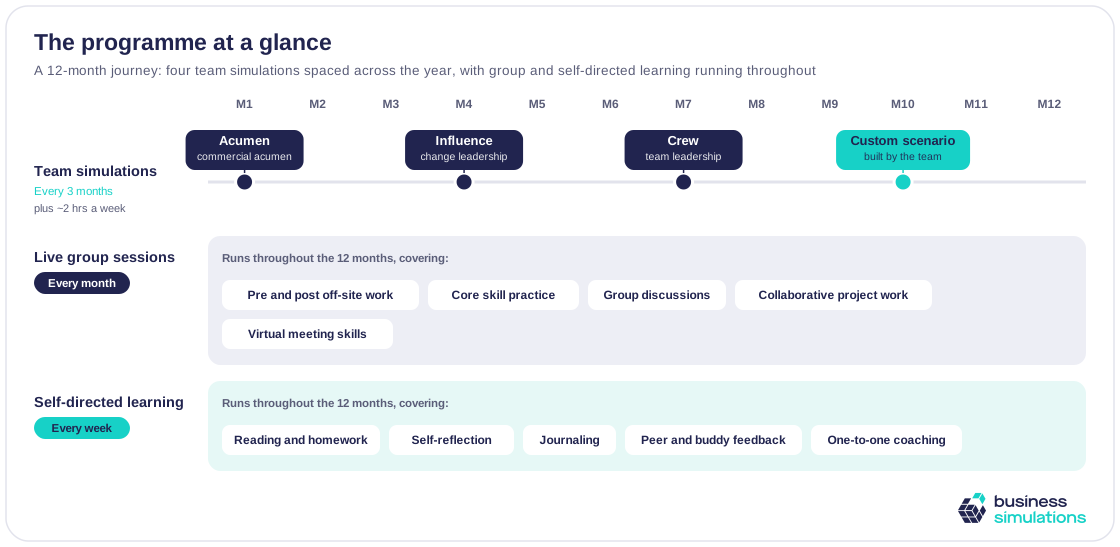
Three streams over 12 months
The programme runs three complementary streams in parallel, each with its own rhythm.
1. Team simulations (around two hours a week)
Team-based simulations are the backbone, run in focused sessions with team preparation beforehand and structured reflection afterwards. The example uses four simulations spaced across the year, each building a core capability:
- Acumen for commercial and financial acumen
- Influence for change leadership and stakeholder influence, explored further in why people resist change, and how to earn buy-in
- Crew for team leadership and managing people
- A custom business scenario for the finale, designed and delivered by the participants themselves
2. Live group sessions (around two hours a month)
Once a month the whole cohort comes together to build shared skills: preparing for and debriefing the simulations, practising core management skills, running group discussions, working on a collaborative project, and sharpening the craft of leading effective virtual meetings.
3. Self-directed learning (around one hour a week)
Between the group touchpoints, participants keep momentum on their own and in pairs: reading and homework, structured self-reflection, journaling, peer and buddy feedback, and one-to-one coaching with a facilitator.
Two features that make it land
Two design choices lift the programme from a schedule into something participants remember.
First, a set of practical management course books that give each topic a lasting reference beyond the live sessions.
Second, the finale. Rather than sit another simulation, each team designs and delivers their own custom business simulation to colleagues, using a straightforward design tool. Building a simulation forces a group to master the underlying concepts, and it leaves the organisation with something reusable. It is also the clearest demonstration of how a tailor-made simulation can be built around your own business.
Why the shape matters
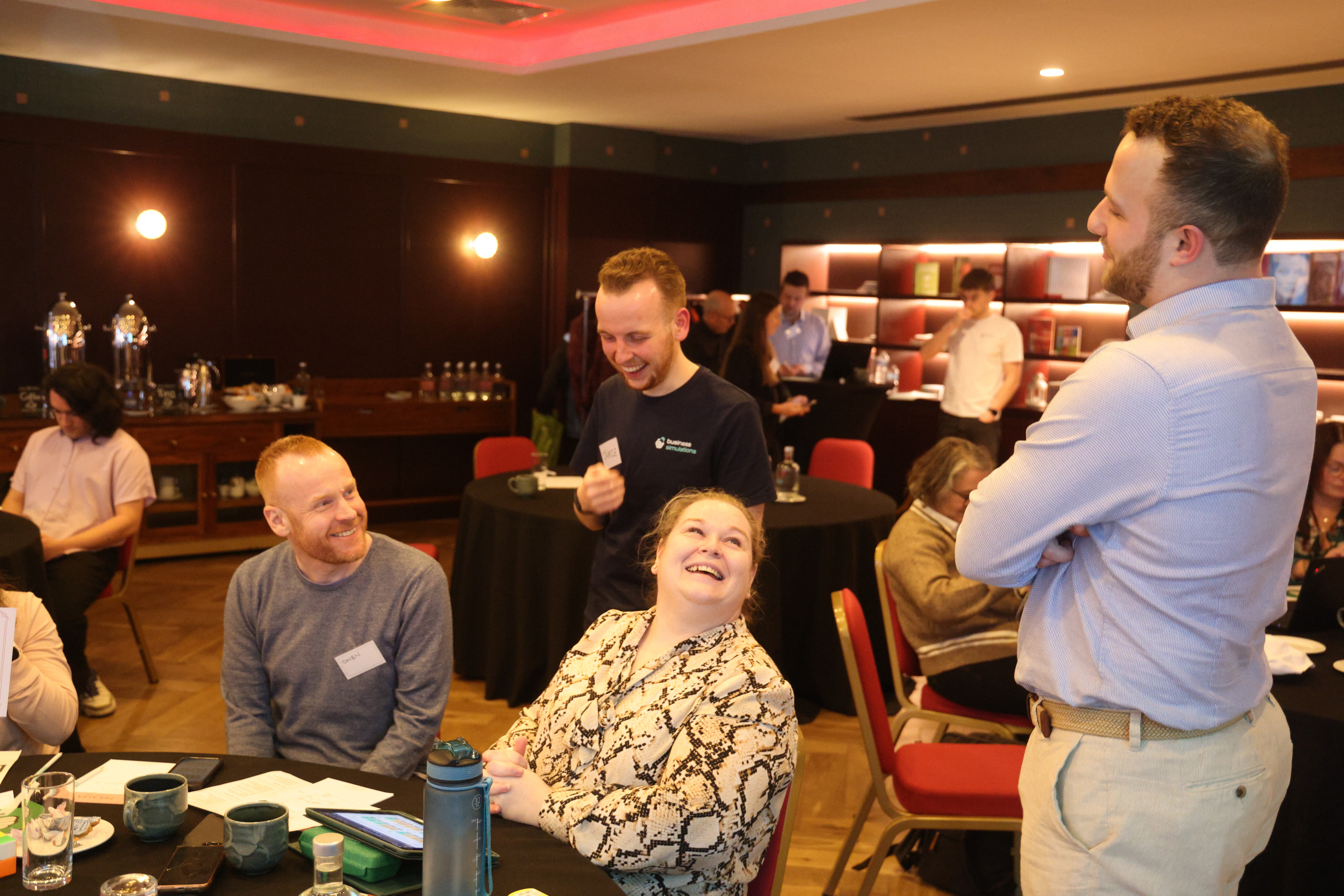
Spacing the learning across a year, and mixing live simulations with group work and self-directed study, is what turns a programme into lasting learning rather than a burst of activity that fades. See how leaders actually learn through the stories they create for more on why. It also keeps a cohort connected to each other and to the organisation over time, which matters as much for engagement as it does for skills.
The example above is a starting point, not a fixed plan. Whether your priority is financial acumen, change management, high-performing teams, or a blend of all three, the streams and simulations can be arranged around your goals.
To adapt this template for your organisation, or to talk through running a programme like it, get in touch.
About the Author

Ken is an expert practitioner, author and speaker on collaboration, high-performing teams and game based learning.
Published Sep 3, 2020