So you think you are good at collaboration? A leadership skills checklist
By Ken ThompsonLast updated Oct 5, 2026
Most leaders and managers hold a surprisingly narrow view of what it means to collaborate well. Ask them to name the skills involved and many struggle to get past three: communicate, share, be a team player.
Collaboration is broader than that. This article is written for senior leaders and L&D managers, and it sets out 12 distinct collaboration skills, from the foundations most people recognise to the advanced ones that senior leaders most often neglect. Treat it as a checklist: score yourself, and your team, honestly against each one, and let the gaps shape your next development conversation.
A theme runs through several of them, which is getting the balance right between collaboration and competition. The two are not opposites, and some of the most valuable collaboration skills live exactly where they meet.
First, get clear on what you mean by collaboration
'We need to collaborate better' is one of the most common things a leader says, and one of the vaguest, because everyone means something slightly different by it. Three questions pin it down:
- Is it internal or external? Better collaboration within a team is really a question of building high-performing teams; better collaboration between teams is inter-team collaborative working
- If it is internal, is it about team leadership or team membership? We tend to fixate on leadership and forget that being an effective team member is a skill in its own right, the principle that every member is to some degree a leader
- If it is external, are the teams inside the same organisation or not? Inside one organisation the main obstacle is sub-optimisation, or silo thinking, where each part optimises itself at the expense of the whole; across organisations you also have to reconcile goals that may genuinely conflict
Getting specific about which of these you mean is what turns a vague aspiration into something you can actually work on.
The 12 collaboration skills every leader needs
The first five are the foundations, and they form a ladder of increasingly engaged collaboration. The next seven are the advanced skills, where collaboration gets genuinely hard and where the balance with competition matters most. The goal with them is not more altruism or team spirit, which rarely last, but a sharper grasp of how competition and collaboration interact.
The foundations: Collaboration 101
- Team collaboration. Collaborating well both when you lead a team and when you are 'just' a member of it. Good team followership is rarely discussed, yet it is vital, especially in senior teams. If you cannot collaborate inside your own team, what chance do you have outside it?
- Coordination. Communicating well with others who share an interest in a goal or project.
- Resource sharing. Sharing common resources, such as people or facilities, equitably and considerately with other parties.
- Cooperation. Working together, but separately, on a shared challenge.
- Co-invention. Working in a fully integrated way with another party, investing together and sharing both the risk and the reward.
The advanced seven that leaders neglect
- Avoiding sub-optimisation. Prioritising the whole over your own part or team. Good systems optimise the whole and sub-optimise the parts; poor ones do the reverse.
- Collaborative competition. Collaborating temporarily with a competitor for mutual gain, for example jointly sponsoring an event to grow a market you both want to serve.
- Alliancing. Building a partnership, short or long term, beyond your usual boundaries and co-travellers. Think coalition government.
- Eco-competition. Winning without needing others to lose. Ask 'who must lose for you to win?' and the honest answer is often nobody, so resist, for instance, a race to the bottom on price when there is enough business for everyone.
- Edgy collaboration. Collaborating without looking weak. Be a generous team member, but not a naïve one: make sure your contribution is seen and credited.
- Negotiating. Give and take with another party for mutual advantage. If your collaboration involves no trade-offs, it is probably one-sided rather than mutual.
- Virtual collaboration. Performing all of the above not only face to face, but down a phone line or over a video call, which for most teams is now the norm rather than the exception.
These 12 are not the whole of collaboration. There is also big-picture collaboration, where a leader invests or offers help beyond their own boundary for the good of the wider organisation or community, sometimes making the first move to break a stalemate in the hope of a response. But a leader who has genuinely mastered these 12 is well on the way to becoming a collaboration maestro.
Turning the checklist into a score
You can run this as a simple self-assessment with nothing more than pen and paper. Rate yourself, and each member of your team, on all 12 skills, then compare notes. The disagreements are usually where the most useful conversations start, and a shared record gives you a baseline to develop against over time.
Developing these skills through experience
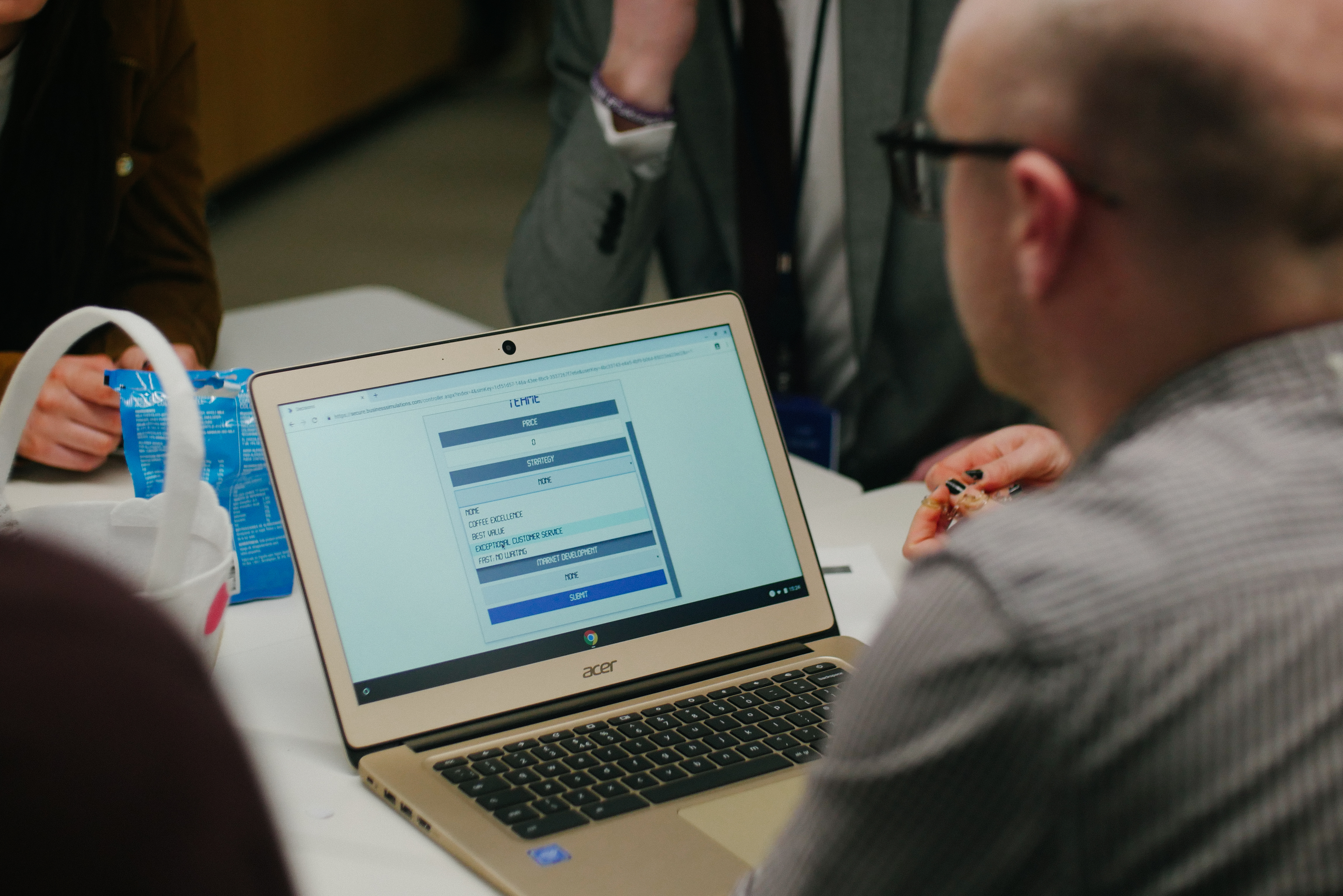
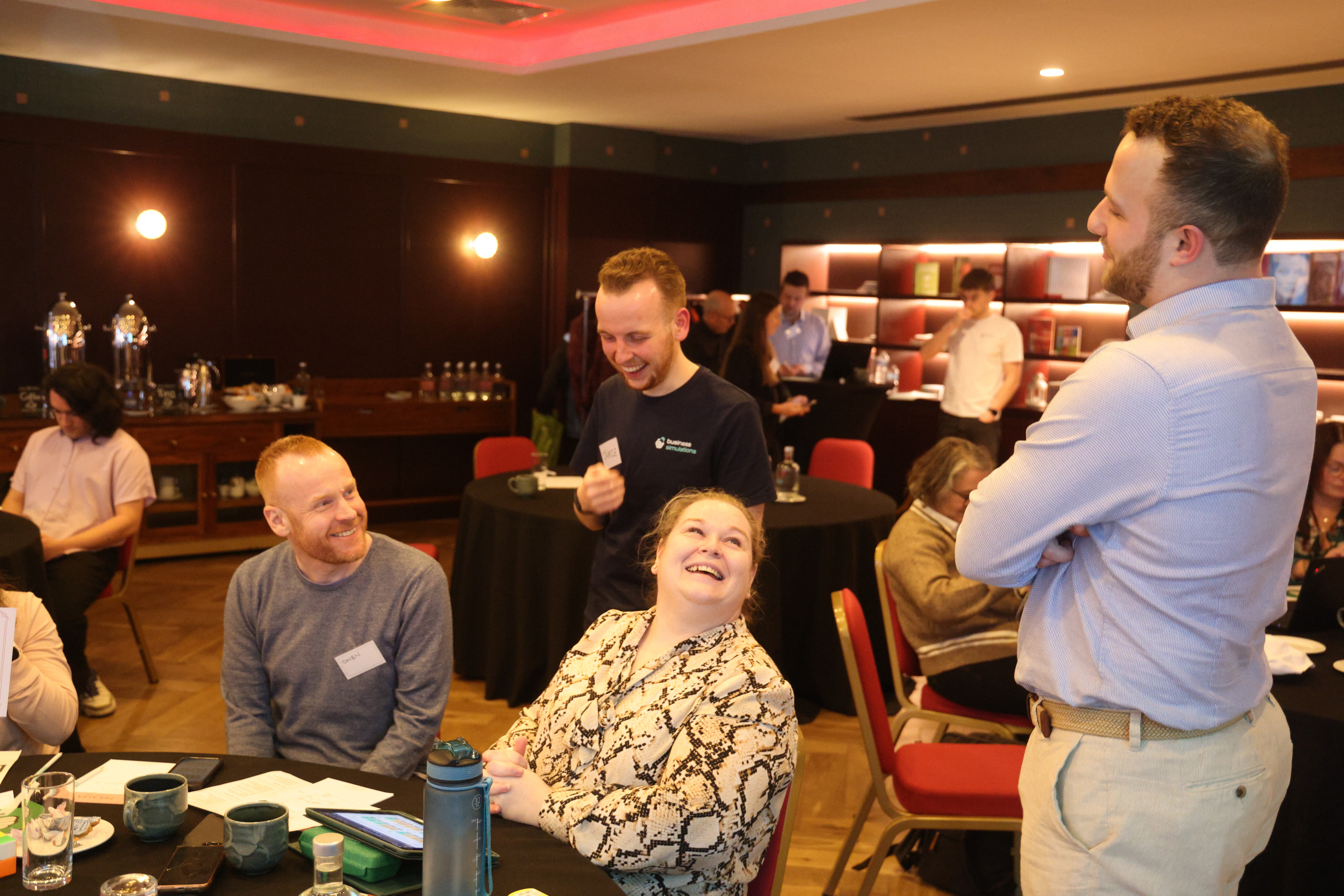
Collaboration is a practised skill, not a fixed personality trait, and it develops fastest through experience rather than instruction. Team-based simulations are a powerful way to build these skills in a psychologically safe setting, live and in-person or virtually, facilitated by our experts, and they pair naturally with the checklist above:
- Crew and Cruise develop team collaboration, both leading and following, under real-time pressure, while Cohesion builds the trust and conflict-handling that sit underneath it
- Compete shows leaders when it pays to collaborate with a competitor rather than simply fight them
- Consortium puts rival businesses into a single high-stakes project where, quite literally, if one fails all fail, which makes it a powerful tool for busting silos and moving a team from a competitive mindset to a genuinely collaborative one
If collaboration is a capability you want to strengthen across your organisation, our collaboration challenge sets out how we help leaders and teams develop it. If your teams mainly struggle with trust and alignment inside the team, our high-performing teams challenge is the better starting point. For a need specific to your own business, we can also build a tailor-made simulation. We would be glad to talk it through with you.
About the Author

Ken is an expert practitioner, author and speaker on collaboration, high-performing teams and game based learning.
Published Feb 20, 2020