Negotiation training for teams: how simulations build the skills behind a better deal
By Ken ThompsonLast updated Oct 19, 2026
'In business, you don't get what you deserve, you get what you negotiate.' Chester Karrass
If you are responsible for building negotiation skills across a team, this guide covers the ideas worth teaching and the practice that makes them stick. It is written for learning and development managers and the leaders who sponsor their programmes.
Negotiation and collaboration are two of the most important skills a manager can have, and two of the most easily confused. They are often used interchangeably, yet they are not the same thing, and knowing how they fit together is what separates an agreement that lasts from one that quietly unravels.
A useful way to think about it: a negotiation is a blend of collaboration and competition between parties who have both common and conflicting interests. Lean too far toward competition, or lack the collaboration to find common ground, and the conversation becomes a win-lose contest. Lean too far toward collaboration, or stay naive about the competitive element, and you risk being taken advantage of. Either way, at least one party walks away dissatisfied.
The most widely used answer to this balance is principled negotiation, sometimes called collaborative negotiation, made popular by 'Getting to Yes' by Roger Fisher and William Ury. It blends collaboration and competition on purpose rather than by accident.
The four blends of collaboration and competition
Collaboration and competition are less opposites than two ends of a spectrum, and most working relationships sit somewhere along it. There are four recognisable blends:
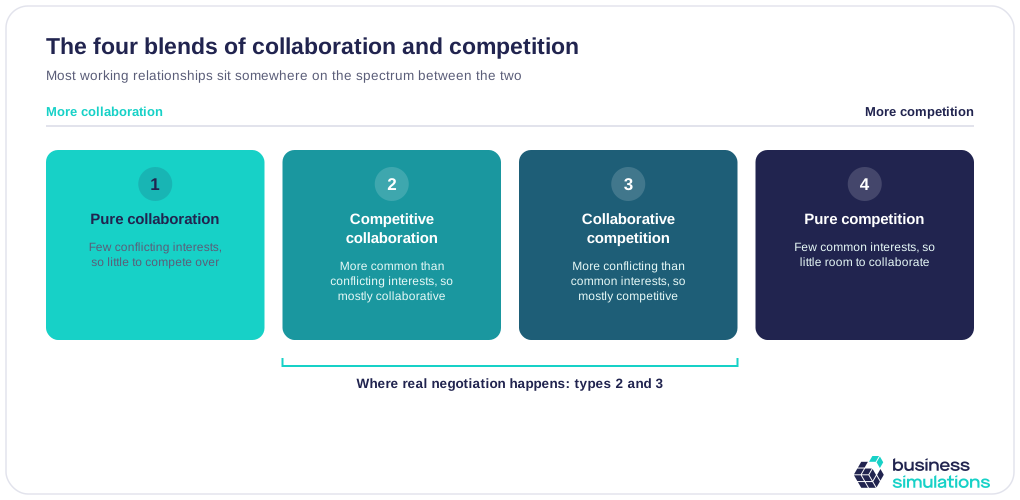
- Pure collaboration: few conflicting interests, so little to compete over
- Competitive collaboration: common interests outweigh conflicting ones, so the work is mostly collaborative. In the Consortium simulation, six normally competing businesses collaborate to deliver a test project for a major customer, where the priority is the collective result without being short-changed along the way
- Collaborative competition: conflicting interests outweigh common ones, so the work is mostly competitive. Rival coffee shops developing a shared market, as in the Compete simulation, are a good example: secure what you need first, then help the other party where you can
- Pure competition: few common interests, so little room to collaborate
A successful negotiation is usually a type 2 or type 3. Type 1 has little to disagree about, and type 4 tends to leave at least one party feeling like the loser, who will often settle the score at the next opportunity.
Getting into shape before you negotiate
Preparation decides most of the outcome. Before you open a negotiation, get clear answers to four questions:
- Why do you need to negotiate at all? What is stopping you achieving what you need on your own, and could you get there without negotiating?
- Who do you need to negotiate with? One party or many, and are there credible alternatives?
- Where do your interests align, and where do they conflict? Is there a genuine win-win to aim for?
- What blend of collaboration and competition fits? How long will the relationship last, how will it end, and what happens next?
Conducting an effective negotiation
Once you are in the room, the four guidelines of principled negotiation keep the conversation productive:
- Separate the people from the problem. Take ego and emotion out of the exchange and it becomes far easier to stay collaborative
- Focus on interests, not positions. A classic example: a couple have one orange between them. Split by position, each gets half. Explore interests and you may find one wants the peel for baking and the other the fruit to eat, so both get what they actually need. Bargaining over positions usually ends in a compromise that suits no one
- Generate options for mutual gain. Once you understand each other's interests, work together to invent win-win options. Treat it as brainstorming: create plenty of possibilities before judging any of them
- Insist on objective criteria. Review the options against agreed, neutral standards to find the best fit for both sides
A key tool here is the BATNA, your best alternative to a negotiated agreement. It is the yardstick against which you judge any offer, and it protects you from a poor deal, because no deal is better than a bad one and you can always walk away. It is not quite the same as a bottom line: meeting a prospective supplier, for instance, your BATNA might be an alternative supplier you have already lined up. Harvard's Program on Negotiation makes the point well, that the stronger your BATNA, the more confidently you can negotiate.
Seven common mistakes to avoid
Even experienced negotiators fall into predictable traps. Watch for these seven:
- Don't broadcast how tough you will be. Reassure your sponsors you will fight for their interests, but boasting about it only hardens the other party's position and sets up a win-lose dynamic
- Don't demonise the other party. Cast them as the enemy and you remove the very flexibility you will need; common ground is almost always there if you look for it
- Don't keep threatening to walk away. Have a BATNA, but 'Getting to Yes' is clear that using it to bully or threaten destroys trust and invites the other side to weaponise their own
- Know your weaknesses and don't give away your power. A simple SWOT analysis of both positions shows who is working to a hard deadline, since whoever needs the deal more, or sooner, negotiates from weakness
- Sort out the ambiguities in your own position first. A compromise imposed rather than worked out together tends to lose the support of everyone it was meant to satisfy
- Know your negotiating partner. Understand who they answer to and who they must consult before they can agree anything, or you will misread what is possible
- Don't lose the confidence of your own stakeholders. Neglect them and they may stop trusting you and start managing the negotiation themselves, stripping your authority at the table
Practising before it counts
Aviation does not send pilots into a storm without hours in a simulator first, and negotiation is no different. A live, facilitated business simulation is a safe place to practise these skills, where the stakes feel real but a misjudged move costs nothing.
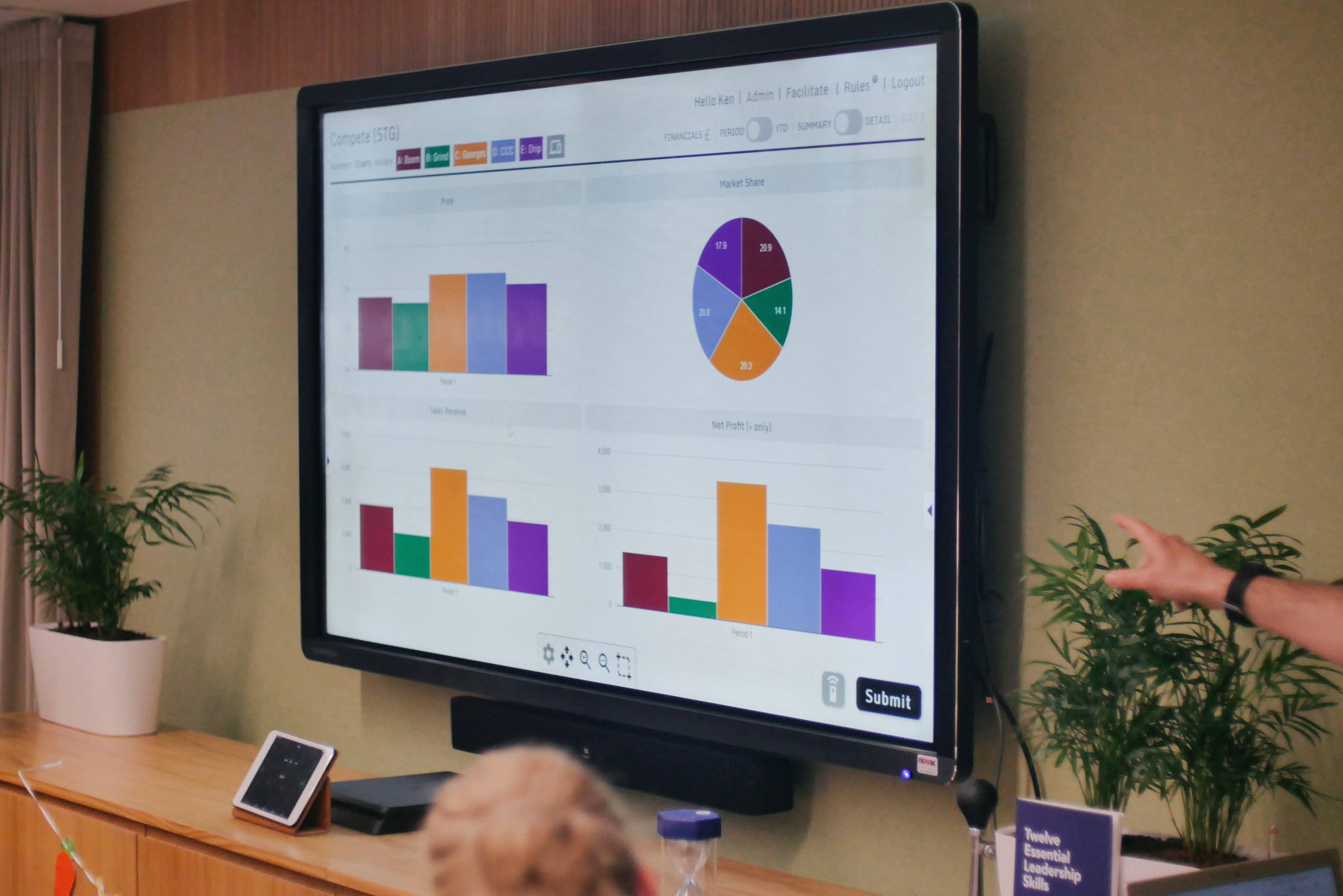
In a simulation such as Compete there are seven natural touchpoints where collaboration and negotiation are tested:
- Agreeing your team's goals
- Reviewing and refining those goals with other teams
- Making your team's operational decisions each round
- Getting your team back on track after a misstep
- Helping another team recover
- Dealing with the unexpected together
- Managing the critical final round
Because it is played in teams, competing and collaborating in real time, participants feel the dynamic first-hand and can carry the lesson straight back to the workplace.
What to look for in negotiation simulation training
If you are comparing options for your people, these are the questions that separate a useful programme from a one-off exercise:
- Do participants negotiate with real counterparts in real time, rather than working through a script
- Is there genuine pressure, such as shared resources, deadlines, and interests that conflict
- Does a facilitator link what happened in the room to the principles above, including BATNA, interests over positions, and objective criteria
- Is the negotiation part of a wider business decision, so people practise the skill in the context of strategy and finances, not in isolation
- Can the scenario be shaped to your own business when a general one will not fit
Bringing it together
Negotiation and collaboration are distinct skills that work best in combination. Handled well, they produce agreements that hold, and that leave no resentment to be paid back later.
Our Acumen simulation puts strategic, financial, and negotiation decisions under pressure in a single global business scenario, which suits senior leaders, while Consortium and Compete focus on the collaboration and competition blend directly. All three sit within our financial acumen challenge. If the negotiations your people face are specific to your industry, customers, or contracts, we can build a tailor-made simulation around them.
To talk through how a simulation could build these skills in your team, get in touch.
About the Author

Ken is an expert practitioner, author and speaker on collaboration, high-performing teams and game based learning.
Published Sep 19, 2019